
What’s New
Discover the latest updates about the Middle-Mile Broadband Initiative.
Subscribe for updates on the implementation of the State’s Broadband Action Plan, Middle-Mile Broadband Initiative, and other digital equity and inclusion activities.
January 2026 Update
January 26, 2026
Network Hut Delivery Advances Construction
This month, the California Department of Technology (CDT) delivered a new network hut to its designated site in the City of San Fernando, another milestone in building the statewide open access Middle-Mile Broadband Network (MMBN). Hut delivery and placement are part of the broader construction process underway across the state. These climate-controlled structures house the electronics needed to operate the middle-mile network and serve as backbone support points, allowing fiber-optic routes to connect.
This first hut was delivered on January 8, 2026, after site preparation was completed. The hut will support network operations and help move the project closer to connecting communities to the statewide network once power and electronics are installed.
Q1 2026 Middle-Mile Advisory Committee Meeting
The Q1 Middle-Mile Advisory Committee (MMAC) meeting was held on January 16, 2026, at the Sacramento County Board of Supervisors building and online via Zoom. The Committee heard the latest updates on the Middle-Mile Broadband Initiative (MMBI) from CDT and its partners at Caltrans and GoldenStateNet (GSN). The California Public Utilities Commission (CPUC) also provided updates on the last-mile programs that focus on last-mile connections and on the continued coordination efforts with CDT and last-mile grant recipients connecting to the MMBI network.
During the meeting, CDT highlighted the progress of the MMBI, sharing construction updates and operational milestones. In addition, CDT welcomed two guest speakers, Tribal Chairman Steven Orihuela of the Bishop Paiute Tribe, and Sarah McCormick, the Housing and Economic Development Manager for the City of Fort Bragg. These guest speakers shared updates on the work happening in their communities, including installation progress in the City of Fort Bragg, and the Bishop Paiute Tribe’s upcoming connection to the MMBN through the Digital 395 segment. The recordings, transcripts, and presentations will be available on the Past Meeting Resources page on the MMBI website in the coming weeks. More information about the MMAC can be found on the Meetings page.
Q1 2026 California Broadband Council Meeting
The Q1 California Broadband Council (CBC) meeting was held Friday, January 23, 2026. At the meeting, state agencies provided updates on Broadband for All Action Plan implementation, middle-mile and last-mile programs, Statewide Broadband Adoption and Affordable Connectivity Program (ACP) mobilization efforts, the State Digital Equity Plan (SDEP), and Broadband Equity, Access, and Deployment (BEAD) programs.
The Deputy Director of California’s MMBI presented network progress, including permitting and construction status, the first planned community connection with the Bishop Paiute Tribe in early 2026, and an operations look ahead.
To find past meeting recordings, presentations, and minutes, access the Broadband For All: Past Events page.
Upcoming Stakeholder Engagement
CDT will be holding its first quarterly (Q1) Stakeholder Engagement meeting for the year on January 31, 2026. These sessions are designed for stakeholders and partners to ask questions and receive project updates. For more information about these meetings, you can contact CDT by sending an email to middlemile@state.ca.gov.
Installation Updates
The MMBI is making significant progress across the state. Nearly 5,200 miles have been moved into installation through CDT’s joint build, IRU/lease, purchase partnerships, and Caltrans.
Here is the breakdown of updates as of January 2026:

Joint Build & Lease Highlights:
CVIN Lease Project: Started installation on approximately 716 miles across various counties.
December 2025 Update
December 2025 Update
December 29, 2025
Telecom Huts Arrive in California, Advancing Statewide Network Deployment
In December 2025, California Department of Technology (CDT) began receiving telecommunications huts which are key components of the Middle-Mile Broadband Network’s (MMBN) operation. These prefabricated, durable, climate-controlled structures house the electronics needed to operate the middle-mile network and serve as backbone support points, allowing fiber-optic routes to connect.
As of December 2025, active hut construction has begun at five unique sites in Southern California with approximately 52 additional sites expected to begin construction by March 2026. As the sites are energized, electronics will be deployed to distribute signals and support reliable network performance across long distances.
Node Installation Complete at Key Data Centers
Network node installations are an important step in building California’s MMBN. These nodes serve as key connection points that allow the statewide fiber network to connect with other networks, service providers, and the broader internet, helping prepare the MMBN to support future broadband service across California. In December 2025, CDT completed the configuration and installation of network node equipment at the Equinix Data Center in San Jose. This milestone builds on earlier node installations completed at the CoreSite Data Center in Los Angeles and reflects continued progress toward operational readiness of the middle-mile network.
Q1 2026 Middle-Mile Advisory Committee Meeting
The first quarterly Middle-Mile Advisory Committee (MMAC) meeting of the year will be held on January 16, 2026, at the Sacramento County Board of Supervisors building via Zoom.
Your participation is valued. More information about the MMAC can be found on the Meetings page.
Installation Updates
The MMBI is making significant progress across the state. Nearly 4,430 miles have been moved into installation through CDT’s joint build, IRU/lease, purchase partnerships, and Caltrans.
Here is the breakdown of updates as of December 2025:
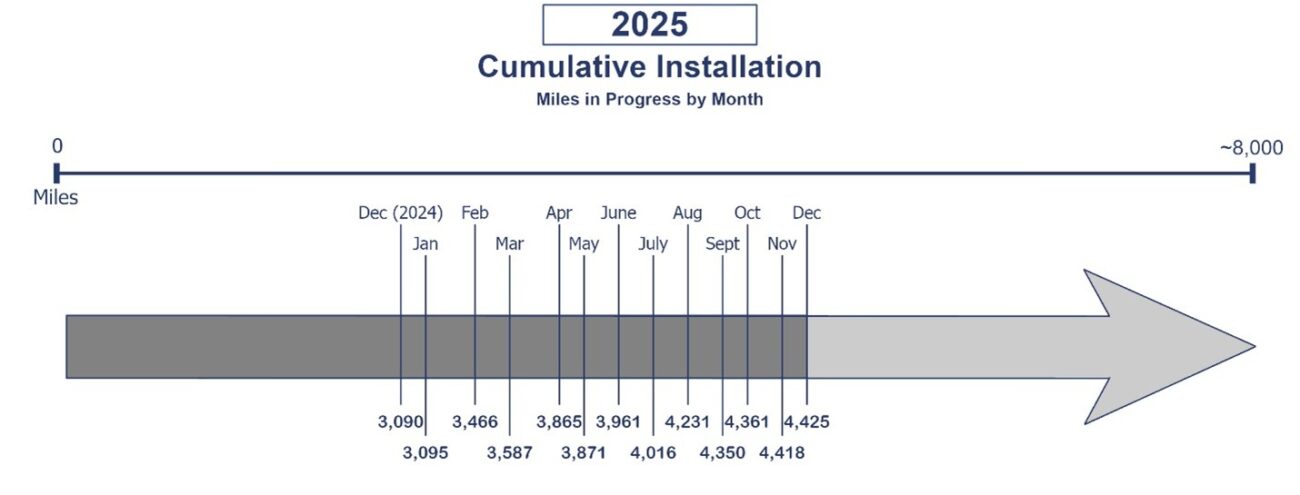
Joint Build & Lease Highlights:
Gateway Cities Council of Governments (GCCOG) Joint Build Project: Installation work began on a ~5-mile segment in Los Angeles County along local roads in the City of La Mirada.
Vero Networks Joint Build Project: Installation work began on a ~2-mile segment in Humboldt County along the Samoa Bridge.
November 2025 Update
November 2025 Update
CDT Releases RFP to select an Operator for the State’s Middle-Mile Broadband Network
On October 16, 2025, the California Department of Technology (CDT) released a formal Request for Proposal (RFP) looking for an experienced operator to provide the maintenance and operations of the Middle-Mile Broadband Network (MMBN) under the Middle Mile Broadband Initiative (MMBI). Qualified companies are now invited to submit detailed proposals explaining how they would maintain, operate, and support this critical network backbone for the public.
A “Proposers’ Conference” was held on October 27 to walk through the RFP, answer questions, and ensure all interested firms understood the requirements and selection process.
Vendors were able to submit their questions by November 3, and responses will be published. Full proposals must be submitted by December 19. For details and the official RFP document.
Tribal Broadband Bootcamp Brings Hands-On Learning to Southern California
Earlier this month, tribal leaders, network engineers, and broadband advocates gathered in Southern California for the latest Tribal Broadband Bootcamp. The bootcamp is a hands-on training event designed to help Indigenous communities build and maintain their own internet networks. The multi-day workshop was held at Rantanen Town Ranch in Aguanga, CA. Participants learned practical skills in network design, installation, and maintenance.
Additional bootcamps are planned for the months ahead. Anyone interested in staying informed or supporting future events are encouraged to get involved. Visit tribalbroadbandbootcamp.org or email info@tribalbroadbandbootcamp.org for more information.
Installation Updates
The MMBI continues to make significant progress across the state. Approximately 4,418 miles have gone to installation through CDT’s joint build, IRU/lease, purchase partnerships, and Caltrans. Here is the breakdown of updates as of November 2025:
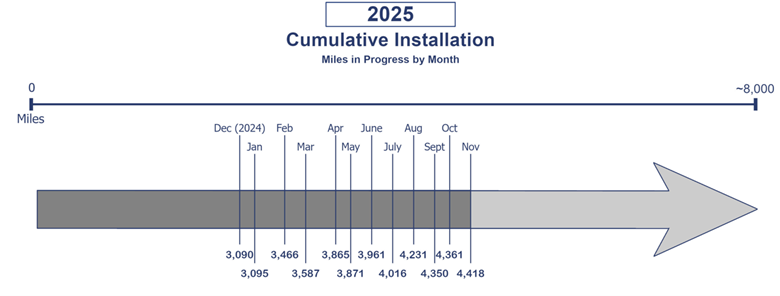
Caltrans Construction Highlights:
Caltrans is actively installing over 253 miles of the MMBN across the state. The latest Caltrans route began installation this month on an approximately 7-mile segment in Riverside County, along State Route 74.
Joint Build & Lease Highlights:
Arcadian Joint Build Project: Our Joint Build partner, Arcadian, will install over 1,000 miles of network infrastructure along 5 different routes throughout the state. Installation started this month on an approximately 47-mile segment in Mendocino County, along State Route 101.
City of Fort Bragg: On November 11 installation kicked off on a 4-mile segment that runs along State Route 1 through the middle of the City of Fort Bragg and is forecasted to be completed in Q1 of 2026. This was a great opportunity for both Fort Bragg and the State as they are actively installing their last-mile assets in parallel which will enables the City’s ability to get fiber to homes.
October 2025 Update
October 2025 Update
October 27, 2025
Digital 395 Electronics Installation Nears Completion
The California Department of Technology (CDT) is preparing to activate the 423-mile Digital 395 route recently acquired from the California Broadband Cooperative. It will be the first operational segment of the Middle-Mile Broadband Network (MMBN). CDT will begin delivering service to tribal communities and local partners in the Eastern Sierra now that all 11 hub locations are complete along the U.S. 395 corridor.
The Bishop Paiute Tribe is expected to be the first to benefit. CDT is working closely with the Tribe’s technology leadership to connect directly to the middle-mile network. This partnership accelerates the Tribe’s broadband timeline. CDT is also engaging with more tribes along the route to extend internet connectivity across the region.
State Breaks Ground on New Network Huts to Advance Middle-Mile Broadband
In October, the Middle-Mile Broadband Initiative (MMBI) reached another key milestone. CDT and its construction partner, American Dark Fiber (ADF), broke ground on 11 additional network huts (139 in total) that will house the electronics needed to operate the middle-mile network.
ADF broke ground on these five huts in October, with an additional 13 planned for construction before the end of the year. Once installed, these durable, climate-controlled structures will serve as backbone support points that house electronics and signal amplifiers for the MMBN.
Q4 Middle-Mile Advisory Committee Meeting
The Q4 Middle-Mile Advisory Committee (MMAC) meeting was held on October 17, 2025, at the Sacramento County Board of Supervisors building and online via Zoom. The Committee heard the latest updates on the MMBI from CDT and its partners at Caltrans and GoldenStateNet (GSN). The California Public Utilities Commission (CPUC) also provided updates on the last-mile programs that focus on last-mile connections to the MMBN.
During the meeting, CDT highlighted the progress of the MMBI, sharing construction updates and operational milestones. In addition, CDT shared a video highlighting MMBI progress and project partnerships across the state. The recordings, transcripts, and presentation, will be available on the Past Meeting Resources page on the MMBI website in the coming weeks.
Closing Out the Year: Q4 Stakeholder Engagement
CDT hosted its final quarterly Stakeholder Engagement Session of the year on October 31, 2025. These sessions are designed for stakeholders and partners to ask questions and receive project updates. For more information about these meetings, you can contact CDT by sending an email to middlemile@state.ca.gov.
Installation Updates
The MMBI is making significant progress across the state. Approximately 4,361 miles have gone to installation through CDT’s joint build, IRU/lease, purchase partnerships, and Caltrans. Here is the breakdown of updates as of October 2025:
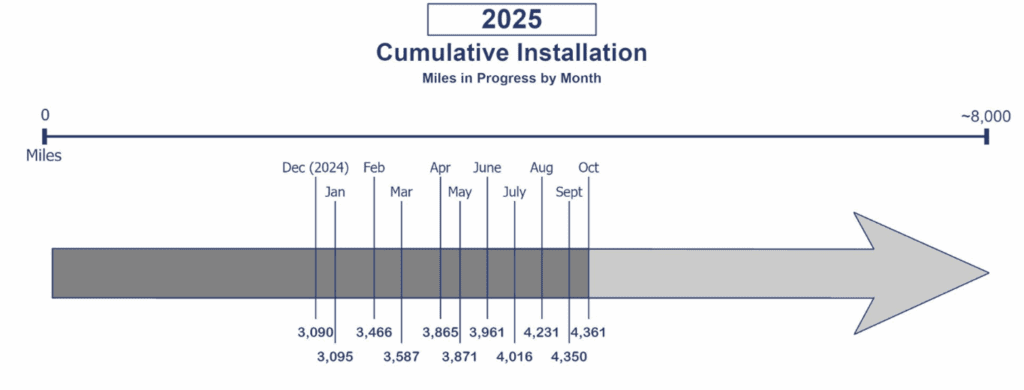
Caltrans Construction Highlights:
Caltrans continues to move from planning to installation on approximately 246 miles of the MMBN as projects move from pre-construction to installation. Installation started this month for the following two segments:
- Approximately 2 miles in San Diego County along State Route 67
- Approximately 2 miles in San Diego County along State Route 163
Joint Build & Lease Highlights:
American Dark Fiber (ADF) Project: Installation from ADF has also made substantial progress. Installation started this month for the following two segments:
- Approximately 5 miles in Calaveras County along State Route 4.
- Approximately 2 miles (Gateway Cities segment) in Los Angeles County along local roads.
ADF Hut Highlights:
- Construction started on 5 huts in Los Angeles County.
September 2025 Update
September 2025 Update
September 29, 2025
Connecting Tolowa Communities: A New Partnership
The California Department of Technology (CDT) and the Tolowa Dee-ni’ Nation have agreed to a lease partnership to expand high-speed broadband infrastructure for tribal communities in Northern California. Together, CDT and the Tribe will construct approximately 19 miles of middle-mile broadband fiber through their ancestral lands. The route will extend south from the Oregon border, near the Smith River, through the heart of Tolowa territory, past Fort Dick, and end near the outskirts of Crescent City.
This fiber backbone will enable remote neighborhoods, public institutions, and community hubs to connect to reliable broadband internet. For the Tolowa Dee-ni’ Nation, the project represents both a strategic infrastructure investment and a meaningful step toward greater digital equity. By working together, CDT and the Tolowa Dee-ni’ Nation are ensuring that rural and Tribal communities gain access to dependable internet service, supporting California’s broader vision of “Broadband for All”.
CDT Expands Construction Partnership with American Dark Fiber
CDT has expanded its partnership with American Dark Fiber (ADF) to construct middle-mile broadband infrastructure in Los Angeles and Mendocino counties. Under this agreement, ADF will serve as the construction partner for two previously announced joint-build projects: approximately 75 miles of fiber across the Gateway Cities region in southeast Los Angeles County, and 4 miles of fiber along State Route 1 in the City of Fort Bragg.
Earlier this year, CDT entered into joint-build agreements with both the Gateway Cities Council of Governments and the City of Fort Bragg to bring high-speed open-access broadband to their communities, many of which are historically underserved. By bringing ADF on board as the construction partner, the State is able to maximize efficiency and cost-effectiveness in deploying critical broadband infrastructure.
7th Annual North State/North Coast Broadband Summit Held August 28th
The North State Planning and Development Collective hosted the 7th Annual Broadband Summit which took place on August 28, 2025. Representatives from CDT, the California Emerging Technology Fund, the California Public Utilities Commission (CPUC), and the National Telecommunications Industry Association (NTIA) convened to discuss broadband efforts, legislation, and initiatives across the North State region.
This virtual event, which was free and open to the public, aimed to provide attendees with timely updates on efforts to bridge the digital divide in Northern California. The Middle-Mile Broadband Initiative (MMBI) Deputy Director, Mark Monroe, and the Deputy Director for the Office of Broadband and Digital Literacy (OBDL), Scott Adams, participated as panelists to share insights on Broadband for All and Middle-Mile developments relevant to counties represented by the North State Broadband Connect Consortium.
For more information, you can contact Alice Patterson of the North State Planning and Development Collective at ampatterson@csuschico.edu.
Third Joint Federal-State Rights-of-Way Workshop & Consultations with Tribes
On Tuesday, September 30, 2025, the MMBI team will join tribal leaders, federal and state agencies, and utility partners for the Third Joint Federal-State Workshop and Tribal Consultations. Sponsored by CPUC and the Bureau of Indian Affairs (BIA) and hosted by the Blue Lake Rancheria Tribe, the workshop will focus on strengthening collaboration to expand broadband and utility infrastructure across Northern California’s tribal regions.
This event brings together CPUC, BIA, utility partners and state entities to meet directly with tribal leaders to discuss key challenges including permitting and Rights-of-Way (ROW) access for utility and broadband infrastructure on Tribal lands.
CDT’s MMBI team will highlight several of its ongoing partnerships with California tribes and present the MMBI Tribal Policy, which establishes an offer to tribes located along or near the Middle-Mile Broadband Network (MMBN). This policy is designed to ensure that tribal communities are able to benefit directly from California’s statewide broadband investment. To date, CDT has presented the policy to more than 25 Tribes, with strong engagement from tribal governments across the state.
With a focus on Northern California tribes and the utilities that serve their regions, the workshop provides a vital platform for dialogue, problem solving, and partnership.
Q4 Middle-Mile Advisory Committee Meeting
The last Middle-Mile Advisory Committee (MMAC) meeting of the year will be held on October 17, 2025, at the Sacramento County Board of Supervisors building and via Zoom. The committee will receive the latest updates on the MMBI from CDT and its partners at Caltrans and GoldenStateNet (GSN). CPUC will also provide updates on the last-mile programs it is administering for the last-mile connections to the MMBN.
Your participation is valued. More information about the MMAC can be found on the Meetings page.
Installation Updates
MMBI continues to make significant progress across the state. Approximately 4,350 miles have gone to installation through CDT’s joint build, IRU/lease, purchase partnerships, and Caltrans. Here is the breakdown of updates as of September 2025.
Caltrans Construction Highlights:
Caltrans continues to make progress, having moved from planning to installation on approximately 242 miles of the network as projects move from pre-construction to installation. Installation started this month on an approximately 11-mile segment in Plumas County, along State Route 70
Joint Build & Lease Highlights:
Lumen Technologies Joint Build & IRU projects: Installation from one of our joint-build network partners, Lumen Technologies (covering over 1,800 miles across 20 different segments) has also made substantial progress. Installation started this month for the following three segments of approximately:
- 6 miles in San Bernardino County.
- 38 miles in Los Angeles County.
- 54 miles from San Bernardino County to Los Angeles County.
CVIN Leased Project: Installation from one of our leased network partners, CVIN (covering ~2,700 miles across California) started installation this month for the following two segments of approximately:
- 7 miles in Kings County.
- 3 miles in Santa Cruz County.
August 2025 Update
August 2025 Update
August 25, 2025
Historic Tribal-State Partnership Brings Broadband to Hoopa Valley
HOOPA VALLEY, CA. – August 25, 2025
On August 12, the Leadership of the Hoopa Valley Tribe and the Hoopa Valley Public Utilities District hosted the California Department of Technology (CDT) and the Secretary for Governmental Operations in a gathering on the ancestral lands of the Hoopa Valley Tribe to celebrate a groundbreaking. The event marks the kickoff of construction for nearly 23 miles of high-capacity middle-mile fiber along State Route 96. This joint build partnership provides for a crucial segment of California’s 8,000+ mile open-access middle mile broadband network, and this investment marks a shared commitment to close the digital divide for one of California’s largest and most remote tribal communities.
The ribbon cutting was more than a ceremony, it was a recognition of years of planning, persistence, and partnership between the Tribe and the State. Together, the Hoopa Valley Tribe and CDT forged the first-ever Tribal-State joint-build agreement for middle-mile broadband infrastructure. This set a precedent for these types of equitable and respectful partnerships, and since the agreement with the Hoopa Valley Tribe, the State has signed several other similar agreements with Tribal Nations across California.
For the Hoopa Valley community, the project represents new opportunities and better connectivity for this remote community. This portion of the project will support last-mile connections for roughly 1,900 homes and 3,000 residents, supporting the Tribal community by strengthening access to healthcare, education, economic development, and public safety. This partnership will create a resilient and reliable network that the community can depend on for generations. The event received coverage from local and statewide news outlets, highlighting its importance for both Hoopa Valley and California’s broader connectivity efforts.
“We are very thankful for the Middle-Mile Broadband Initiative (MMBI), our partnership with the State of California, and all the hard work committed towards these projects by our Hoopa Valley Public Utilities District as well as the CA Department of Technology. Through these efforts our community will be more resilient and successful. We look forward to keeping the momentum going!” — Hoopa Valley Tribal Chairman Joe Davis
State leaders echoed that message. Liana Bailey-Crimmins, State Chief Information Officer and Director of CDT, emphasized the broader significance: “Our first-of-its-kind agreement with the Hoopa Valley Tribe proved the concept, opened the door for more tribal partnerships, and shows that statewide connectivity and tribal self-determination go hand in hand. Together, we are building something that benefits not just Hoopa but sets a model for communities across California.”
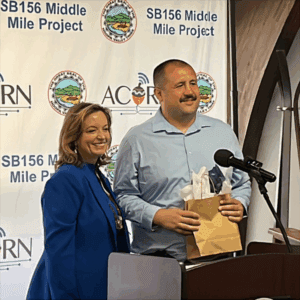
Figure 1: California Department of Technology (CDT)’s Chief Information Officer / Director Liana Bailey-Crimmins presents a gift to Hoopa Valley Tribal Chairman Joe Davis at the Hoopa Valley Tribe groundbreaking on August 12, 2025.
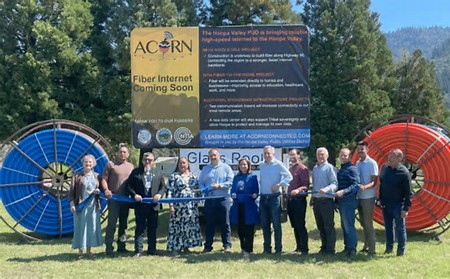
Figure 2: Leaders of CDT, Hoopa Valley Tribal Council, Hoopa Valley Public Utilities District, and CA Public Utilities Commission gather for a ribbon cutting.
North State/North Coast 7th Annual Broadband Summit will be held August 28th
The North State Planning and Development Collective is hosting the 7th Annual Broadband Summit on August 28, 2025. Representatives from the CDT, California Emerging Technology Fund, California Public Utilities Commission (CPUC), and the National Telecommunications Industry Association will be discussing items on north state broadband internet – including current efforts, legislation, and initiatives. This virtual event will be free and open to the public and aims to provide summit attendees with information on what’s happening across the north state to help bridge the digital divide. The MMBI Deputy Director, Mark Monroe, and the Deputy Director for the Office of Broadband and Digital Literacy (OBDL), Scott Adams, will present at the summit as panelists to discuss Broadband for All and Middle-Mile updates that pertain to the counties represented by the North State Broadband Connect Consortium. For more information, you can contact Alice Patterson of the North State Planning and Development Collective at ampatterson@csuchico.edu.
Stakeholder Engagement
CDT hosted its third (Q3) Stakeholder Engagement meeting of the year on August 1, 2025. The MMBI Deputy Director and MMBI’s Project Delivery Manager provided stakeholders updates on network development progress, new and expanded partnerships, and the status on encroachment permitting for its Request for Innovative Ideas (RFI2) Partners. These meetings are designed for stakeholders and partners to get project updates and provide an open venue to be able to ask questions tailored to their respective interest in MMBI. For more information about these meetings, you can contact us by sending an email to middlemile@state.ca.gov.
Coyote Valley Partnership Expands Middle-Mile Broadband Reach
CDT has entered into a new partnership with the Coyote Valley Band of Pomo Indians, marking another important step in expanding equitable internet access across tribal lands. Unlike fiber construction projects, this partnership focuses on the placement of a key state-of-the-art network hut directly on Coyote Valley tribal land to house the electronics powering the network.
Access to this high-capacity infrastructure will allow Coyote Valley tribal members to participate fully in distance learning and telehealth, pursue business opportunities, and safeguard their cultural and community institutions with the tools they need to thrive in a digital world.
This agreement is part of a growing series of partnerships between MMBI and Tribal Nations, reflecting a shared vision that closing the digital divide is inseparable from strengthening tribal resilience and long-term opportunities.
Installation Updates
The MMBI continues to make significant progress across the state. Approximately 4,231 miles, more than half of the planned network footprint, is in installation through CDT’s joint build, IRU/lease, purchase partnerships, and Caltrans. Here is the breakdown of updates as of August 2025.
Caltrans Construction Highlights:
Caltrans continues to make progress, having moved from planning to installation on approximately 230 miles of the network as projects move from pre-construction to installation. Installation started this month on an approximately 6-mile segment in San Diego County along State Route 54.
Joint Build & Lease Highlights:
Siskiyou Telephone Company (Siskiyou Tel) Project: Installation from one of our joint-build network partners, Siskiyou Tel (covering approximately 164 miles), has started this month on an approximately 44-mile segment in Siskiyou County along State Route 96.
Lumen Technologies Joint Build & IRU projects: Installation from one of our network partners, Lumen Technologies (covering over 1,800 miles across 20 different segments) has also made substantial progress. Installation started this month for the following two segments of approximately:
- 134 miles from the City of Riverside to the City of Niland in the Riverside, San Bernardino, and Imperial counties.
- 31 miles from the City of Niland to City of El Centro in Imperial County.
July 2025 Update
July 2025 Update
July 28, 2025
Yurok Tribe Breaks Ground in Klamath with the California Department of Technology, Middle-Mile Fiber Partnership
On July 2, 2025, leaders of the Yurok Tribe and Yurok Telecommunications (YTel) joined the California Department of Technology (CDT) and the California Public Utilities Commission (CPUC), in Klamath, to break ground on approximately 50 miles of middle-mile broadband fiber spanning Yurok ancestral lands from Klamath through Crescent City to Weitchpec.
Constructed by the 100% tribally owned YTel Corporation, the segment will interlock with joint-build projects by the Karuk and Hoopa Valley tribes, creating a resilient, tribally driven digital corridor in the northwest corner of the state.
“Today is a day of celebration, a milestone within the tribe. We’re installing our own fiber with our own team here,” said Joseph L. James, Yurok Tribal Chairman. “We’re going to continue to build our workforce out as it’s always been the full vision of tribal council to provide infrastructure for our tribe.”

Figure 1: Joseph L. James, Yurok Tribal Chairman

Figure 2: Representatives from Yurok Tribe, CDT, and Yurok Telecommunications Corp. (YTel) joining
for a photo opportunity at the YTel Groundbreaking Ceremony.
California Department of Technology Expands Partnership with American Dark Fiber
CDT took a big step toward closing the digital divide by expanding its collaboration with American Dark Fiber (ADF). Under a new agreement, ADF will install 128 state-of-the-art network electronics amplification huts — small but powerful buildings that are essential for keeping California’s growing Middle-Mile Broadband Network operating and running smoothly.
The installation of these huts is an essential next step for communities to gain access to fast, dependable internet. By enabling the backbone of California’s broadband infrastructure, CDT and ADF are helping to bridge the connectivity gap and bring high-speed internet to thousands of unserved and underserved residents.
Upcoming Stakeholder Engagement
CDT will be holding its third quarterly (Q3) Stakeholder Engagement meeting for the year on August 1, 2025. These meetings are designed for stakeholders and partners to get project updates and provide an open venue to be able to ask questions tailored to their respective interest in MMBI. For more information about these meetings, you can contact CDT by sending an email to middlemile@state.ca.gov.
Q3 Middle-Mile Advisory Committee Meeting
The Q3 Middle-Mile Advisory Committee (MMAC) meeting was held on Friday, July 18, at 10:00 am, at the Sacramento County Board of Supervisors building in Sacramento, as well as on Zoom. The Committee heard the latest updates on the MMBI from CDT and its partners at Caltrans and GoldenStateNet (GSN). CPUC also provided updates on the last-mile programs it is administering, focusing on last-mile connections to the Middle-Mile Broadband Network (MMBN).
During the meeting, CDT shared information on new partnership agreements, permitting status, its recent progress in moving to construction, and its efforts in looking ahead to operation of the network. In addition, CDT presented a video highlighting the MMBN operational timeline. We continue to value your involvement, for recordings, transcripts, and presentation go to the Meetings page.
Installation Updates
The MMBI continues to make significant progress across the state. Over 4,000 miles, half of the planned network footprint, is in installation through CDT’s joint build, IRU/lease, purchase partnerships, and Caltrans. Here is the breakdown of updates as of July 2025.
Caltrans Construction Highlights:
Caltrans continues to make progress, having moved from planning to installation on approximately 224 miles of the network as projects move from pre-construction to installation. Installation started this month on an approximately 6-mile segment in San Diego County along State Route 54.
Joint Build & Lease Highlights:
Hoopa Valley Public Utilities District (HVPUD) / Hoopa Project: Installation from one of our joint-build network partners, Hoopa (covering approximately 22 miles), has started this month on an approximately 22-mile segment in Humboldt County along State Route 96.
Yurok Telecommunications (YTel) Project: Installation from one of our lease network partners, YTel (covering approximately 50 miles), has started this month on an approximately 27-mile segment in Humboldt and Del Norte counties along State Route 101.
June 2025 Update
June 2025 Update
June 28, 2025
Vero Networks Celebrates Middle-Mile Fiber Partnership in Eureka Area with the California Department of Technology
Vero Networks, one of the Middle-Mile Broadband Initiative’s network partners, hosted a ribbon cutting on Tuesday, June 24th, at the Humboldt Bay Social Club, located in Samoa. This event highlighted the partnership between Vero Networks and the California Department of Technology (CDT) and their common goal of closing the digital divide.
Through this partnership, CDT adds roughly 24 miles of middle-mile fiber, traversing rural areas from McKinleyville to Eureka/Arcata as part of California’s Middle-Mile Broadband Initiative (MMBI).
Vero Networks’ last-mile build, funded by the California Public Utilities Commission (CPUC), will connect directly into CDT’s 8,100+ mile Middle-Mile Broadband Network (MMBN), creating an end-to-end path for affordable, reliable internet. This unique event highlights the power of public-private partnerships in delivering critical infrastructure to Californians.
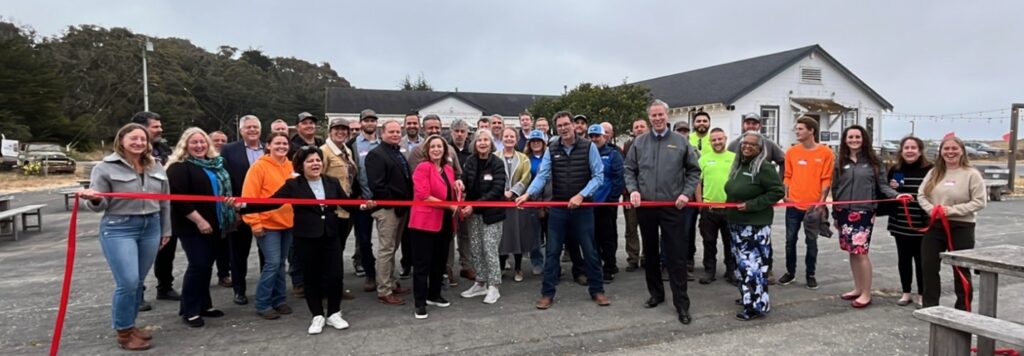
Figure 1: The Mayor of Arcata, Alexandra Stillman, and the Director of CDT, Liana Bailey-Crimmins performing the ribbon-cutting at the Vero Partnership Event.
California Department of Technology Partners with the City of Fort Bragg
In December 2024, the City of Fort Bragg was awarded a Federal Funding Account (FFA) grant by CPUC for a last mile project that will be leveraged to connect to the MMBN in the Fort Bragg area.
This month, CDT and Fort Bragg formally entered into a partnership to build out approximately four miles of network infrastructure as part of the MMBI. Running along State Route 1, this partnership is expected to help close the region’s digital divide, allowing residents and local businesses in Fort Bragg to access fast, more reliable internet services to be able to participate in the modern digital economy.
“Partnering with CDT on the MMBI ensures our community benefits from this historical investment to close the digital divide, noted City of Fort Bragg’s Economic Development Manager, Sarah McCormick. The City of Fort Bragg’s municipal broadband utility will connect directly to the middle-mile infrastructure, delivering reliable and affordable broadband to all residents and businesses – and establishing a foundation for equitable access to education, healthcare and economic opportunity.”
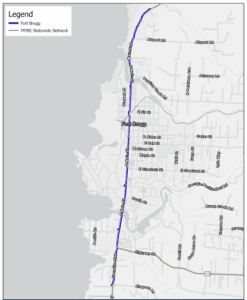
Figure 2: Map of route through Fort Bragg.
Q3 Middle-Mile Advisory Committee Meeting
The Q3 Middle-Mile Advisory Committee (MMAC) meeting will be held on July 18, 2025, at the Sacramento County Board of Supervisors building and on Zoom. The committee will hear the latest updates on the MMBI from CDT and its partners at Caltrans and GoldenStateNet (GSN). CPUC will also provide updates on the last-mile programs it is administering for the last-mile connections to the MMBN. We continue to value your involvement. More information about the MMAC can be found on the Meetings page.
Installation Updates
The MMBI continues to make significant progress across the state. Nearly half of the planned network footprint (~4,000 miles) is in installation through CDT’s joint build, IRU/lease, and purchase partnerships, as well as Caltrans construction. Here is the breakdown of updates as of June 2025.
Caltrans Construction Highlights:
Caltrans continues to make progress, having moved from planning to installation on approximately 217 miles of the network as projects move from pre-construction to installation. Installation started this month for the following three segments:
- 43 miles in El Dorado, Placer, and Alpine Counties along State Routes 50 and 89.
- 7 miles in San Diego County along State Route 125.
- 8 miles in San Diego County along State Route 163.
Joint Build & Lease Highlights:
Siskiyou Telephone Company Project: Installation from one of our joint build network partners, SiskiyouTel (covering approximately 164 miles), has started on a 31-mile segment in Siskiyou County along State Route 3 and Sawyers Bar Road.
May 2025 Update
May 2025 Update
May 27, 2025
California Department of Technology Hosts Q2 Stakeholder Engagement Meeting
California Department of Technology (CDT) hosted its second (Q2) Stakeholder Engagement meeting of the year on May 02, 2025. The Deputy Director of California’s Middle-Mile Broadband Initiative (MMBI) and MMBI’s Project Delivery Manager provided stakeholders updates on network development progress and new and expanded partnerships. They also shared feedback received from Federal Funding Account (FFA) grantees and the methodology behind the MMBI FFA price caps. These meetings are designed for stakeholders and partners to get project updates and provide an open forum to be able to ask questions tailored to their respective interest in MMBI. For more information about these meetings, you can contact MMBI by sending an email to middlemile@state.ca.gov.
Special Middle-Mile Advisory Committee Meeting in May
During the April 18th Middle-Mile Advisory Committee (MMAC) meeting, some Members requested the opportunity to hear directly from the RFI2 construction partners on project status. The Middle-Mile Broadband Initiative (MMBI) will be facilitating an additional MMAC meeting on Wednesday, May 28, at 2:00 pm, at the Sacramento County Board of Supervisors building in Sacramento, as well as on Zoom. The MMAC members will hear the latest updates and overall status from MMBI’s RFI2 partners. We continue to value your involvement. More information about the MMAC can be found on the Meetings page.
Installation Updates
The installation of the MMBI network continues across the state. More than 3,800 miles of MMBI network have gone to installation through CDT’s joint build, lease, purchase, and Caltrans Construction. Here is the breakdown of updates for May 2025.
Caltrans Construction Highlights:
Caltrans continues to make progress moving from planning to installation on nearly 270 miles of the network as projects move from pre-construction to installation. Installation started this month on an approximately 6-mile segment in San Diego County along State Route 54.
April 2025 Update
April 2025 Update
April 28, 2025
California Department of Technology Expands Partnership with American Dark Fiber
The California Department of Technology has expanded its joint-build partnership with American Dark Fiber (ADF), signing a contract agreement to build out nearly 500 miles of middle-mile network infrastructure. CDT, partnering with American Dark Fiber to joint construct these network miles, allows the MMBI to take advantage of streamlined permitting opportunities made possible by SB 156. The State also benefits by sharing construction costs with ADF, leveraging industry partnerships to maximize network miles. These miles are spread across several counties in the northern and southern parts of the state. Together, ADF and CDT aim to address the digital divide and deliver middle-mile infrastructure that will enable high-speed broadband connections for unserved and underserved California communities.
Q2 Middle-Mile Advisory Committee Meeting
The Q2 Middle-Mile Advisory Committee (MMAC) meeting was held on April 18, 2025, at the Sacramento County Board of Supervisors building and on Zoom. The Committee heard the latest updates on the MMBI from CDT and its partners at Caltrans and GoldenStateNet (GSN). California Public Utilities Commission (CPUC) also provided updates on the last mile programs it is administering, focusing on last mile connections to the Middle Mile Broadband Network (MMBN).
During the meeting, CDT shared information on several new partnership agreements, recent progress in moving to construction, coordination with CPUC on FFA grant applications and awardee handoffs, and efforts in looking ahead to operation of the network. The recordings, transcripts, and presentation will be available on the Meetings tab of the MMBI website by May 5, 2025.
Upcoming Stakeholder Engagement
CDT will be holding its second quarterly (Q2) Stakeholder Engagement meeting for the year on May 2, 2025. These meetings are designed for stakeholders and partners to get project updates and provide an open venue to be able to ask questions tailored to their respective interest in MMBI. For more information about these meetings, you can contact CDT by sending an email to middlemile@state.ca.gov.
Installation Updates
The installation of the MMBI network continues across the state. More than 3,864 miles of MMBI network have gone to installation through CDT’s joint build, IRU/lease, and purchase partnerships, and Caltrans. Here is the breakdown of updates for April 2025.
Caltrans Construction Highlights:
Caltrans continues to make progress moving from planning to installation on nearly 305 miles of the network as projects move from pre-construction to installation. Installation started this month for the following three segments of approximately:
- 38 miles along State Route 89 from Sierra County to Nevada County.
- 10 miles along State Route 580 and State Route 24 in Alameda County.
- 4 miles along State Route 125 in San Diego County.
Joint Build & Lease Highlights:
American Dark Fiber (ADF) Project: Installation from one of our joint build network partners, ADF (covering approximately 900 miles), has also made substantial early progress. Installation started this month for the following three segments of approximately:
- 20 miles along State Route 46 from the US-101 to the city of Shandon in San Luis Obispo County.
- 115 miles along State Route 36 and State Route 139 spanning through Tehama, Plumas, and Lassen counties.
- 85 miles along State Route 20, 101, and 29 in Lake County.
LA Bureau of Street Lighting Joint Build project: Installation from one of our network partners, LA Bureau of Street Lighting covers a 13-mile segment in Southern California which has started construction this month. This segment runs along Interstate 110 in Los Angeles County.
March 2025 Update
March 2025 Update
March 28, 2025
City of Fort Bragg Council Approves Joint Build Agreement with the California Department of Technology
In December 2024, the City of Fort Bragg was awarded a Federal Funding Account (FFA) grant by the California Public Utilities Commission (CPUC) for a last mile project that will also support the construction of a portion of the Middle Mile Broadband Network (MMBN) in the Fort Bragg City area. On March 13, the Fort Bragg City Council approved a joint-build partnership proposal with the California Department of Technology (CDT) for constructing approximately 4 miles of network infrastructure.
Running north to south along State Route 1, this partnership is expected to help close the region’s digital divide, allowing residents and local businesses in Fort Bragg to access significantly faster, more reliable internet services to be able to participate in the modern economy.
California Department of Technology Releases FFA Pricing Caps for MMBN Services
This month, CDT released its pricing plans for MMBN services for Federal Funding Account (FFA) grantees. FFA grantees will be able to procure services with speeds ranging from 1 Gbps (1000 Mbps) to 100 Gbps as Internet access, wavelength, and ethernet transport services. Developed based on market soundings and extensive customer interviews, these services reflect the network needs of FFA grantees. Dark fiber services will also be available and are expected to be marketed by CDT’s Third-Party Administrator. The pricing caps for these services were decided through strategic, competitive pricing analysis. They reflect market pricing in well-served markets by using the average of market pricing for services in or between major markets in California (Los Angeles, Sacramento, San Diego, and San Jose). These caps are based on third-party research and pricing data. The caps for each applicable service and speed were calculated based on the weighted average of the corresponding median prices for major metro areas in California. For FFA grantees seeking more details on services and pricing, please email mmbipmo@state.ca.gov.

Figure 1: Fort Bragg Network Map Route running along State Route 1.
Q2 Middle-Mile Advisory Committee Meeting set for April 2025
The second quarterly Middle-Mile Advisory Committee (MMAC) meeting of 2025 will be held on Friday, April 18, at 10:00 am, at the Sacramento County Board of Supervisors building in Sacramento, as well as on Zoom. The MMAC members will hear the latest updates on the MMBI project from CDT and its partners at Caltrans and GoldenStateNet (GSN). CPUC will also be providing updates on the last-mile programs as they relate to the MMBN. We continue to value your involvement. For more information about the MMAC, click here.
Second California Broadband Council Meeting of 2025
The next California Broadband Council (CBC) meeting will take place on Friday, April 25, at 9:30 am, at the Covered California Tahoe Auditorium in Sacramento and via Zoom. Presenters will provide updates on the Broadband for All Action Plan implementation as well as on middle-mile and last mile programs, statewide broadband adoption efforts, the State Digital Equity Plan (SDEP), and the Broadband Equity, Access, and Deployment (BEAD) program.
To find past meeting recordings, presentations, and minutes access the Broadband for All: Past Events’ page.
Installation Updates
The installation of the MMBI network continues across the State. More than 3,587 miles of MMBI network has gone to installation through CDT’s joint build, IRU/lease, and purchase partnerships, and Caltrans. Here is the breakdown of updates for March 2025.
Joint Build & Lease Highlights:
Lumen Technologies Joint Build & IRU projects: Installation from one of our network partners, Lumen Technologies, covers over 1,800 miles across 20 different segments in California. Installation started this month for the following two segments of approximately:
- 48 miles from Riverside City to Temecula City, in Riverside County
- 131 miles from Arvin City in Kern County to Hesperia City in San Bernardino County.
February 2025 Update
February 2025 Update
February 24, 2025
California Department of Technology Partners with Los Angeles Bureau of Street Lighting
The California Department of Technology (CDT) and the Los Angeles Bureau of Street Lighting (BSL) entered a joint build partnership to install and maintain nearly 13 miles of the Middle-Mile Broadband Network (MMBN) in Los Angeles (LA) County through the “key vein of the city”. These miles span local and county roads adjacent to Interstate 110, connecting Downtown LA to the vicinity of the City of Gardena and interconnecting with the LA Lumen route at its southern tip. This is an important part of the network which will provide connectivity to some of the most unserved and underserved communities in the Los Angeles area. The Network Partners page has been updated to reflect this new partnership.
Stakeholder Engagement
CDT hosted its first (Q1) Stakeholder Engagement meeting of the year on January 31, 2025. The Deputy Director of California’s Middle-Mile Broadband Initiative (MMBI) and MMBI’s Project Delivery Manager provided stakeholders updates on network development progress, new and expanded partnerships, and the status on encroachment permitting for its Request for Innovative Ideas (RFI2) Partners. These meetings are designed for stakeholders and partners to get project updates and provide an open venue to be able to ask questions tailored to their respective interest in MMBI. For more information about these meetings, you can contact us by sending an email to middlemile@state.ca.gov.
Installation Updates
The installation of the MMBI network continues across the State. Nearly 3,500 miles of MMBI network are in installation through CDT’s joint build, IRU/lease partnerships and Caltrans. Here is the breakdown of updates for February 2025.
Caltrans Construction Highlights:
Caltrans continues to make progress moving from planning to installation on nearly 800 miles of the network as projects move from pre-construction to installation. Installation started this month for the following two segments of approximately:
- 4.5 miles in Sacramento County along Interstate 5 and State Route 80.
- 10.2 miles in Alameda County along Interstate 580 adjacent to State Route 24.
Joint Build & Lease Highlights:
Lumen Technologies Joint Build & IRU Project: Installation from one of our network partners, Lumen Technologies, covers over 1,800 miles across 20 different segments in California. Installation started this month for the following four segments of approximately:
- 6 miles in San Bernardino County from West Kenwood Avenue to North Industrial Parkway.
- 180 miles along State Route 99 from Sacramento County to Fresno County.
- 116 miles along State Route 43 from Fresno County to Bakersfield County.
- 54 miles along North Industrial Parkway from San Bernardino County to El Monte County.
January 2025 Update
January 2025 Update
January 27, 2025
MMBI: New Year Look Ahead
This will be another exciting and pivotal year for the Middle-Mile Broadband Initiative (MMBI). The California Department of Technology (CDT) has launched its initial marketing efforts by engaging with Federal Funding Account (FFA) grant awardees and other potential customers as it continues installing over 8,000 miles of middle-mile broadband network. Additionally, CDT expects to have a Network Operator in place later this year — a key milestone in bringing the network towards operational readiness.
Middle-Mile Advisory Committee Meeting
The Q1 Middle-Mile Advisory Committee (MMAC) meeting was held on January 17, 2025, at the Sacramento County Board of Supervisors building and on Zoom. The Committee heard the latest updates on the MMBI from CDT and its partners at Caltrans and GoldenStateNet (GSN). CPUC also provided updates on the last mile programs it is administering, focusing on last mile connections to the Middle Mile Broadband Network (MMBN).
During the meeting, CDT shared information on several new partnership agreements, its recent progress in moving to construction, and its efforts in looking ahead to operation of the network. In addition, CDT presented a video highlighting the significance of the partnership between CDT and the Karuk Tribe building two key segments of the MMBN. The recordings, transcripts, and presentation will be available on the Meeting tab of the MMBI website by February 3, 2025.
California Broadband Council Meeting
The Q1 California Broadband Council (CBC) meeting was held Friday, January 24, 2025. At the meeting, state agencies provided updates on Broadband for All Action Plan implementation, Middle-Mile and Last-Mile programs, Statewide Broadband Adoption and Affordable Connectivity Program (ACP) mobilization efforts, the State Digital Equity Plan (SDEP), and Broadband Equity, Access, and Deployment (BEAD) programs.
The Deputy Director of California’s Middle-Mile Broadband Initiative discussed network development progress, new and expanded partnerships, and presented the steps it is taking in looking ahead to operation of the network.
To find past meeting recordings, presentations, and minutes, access the Broadband For All: Past Events page.
Installation Updates
The installation of the network continues across the State. Nearly 3,100 miles of MMBI network has gone to installation through CDT’s joint build and IRU/lease partnerships and Caltrans construction. Here is the breakdown of updates for January 2025.
Caltrans Construction Highlights:
Caltrans continues to make progress moving from planning to installation on nearly 800 miles of the network as projects move from pre-construction to installation. Installation started this month on an approximately 4-mile segment (GLE-162) in Glenn County along State Route 162.
December 2024 Update
December 2024 Update
December 30, 2024
California Department of Technology Partners with the Karuk Tribe
The California Department of Technology (CDT), and the Karuk Tribe, one of the largest federally recognized Indian tribes in California, have entered into a historic partnership to install and maintain approximately 46 miles of the Middle-Mile Broadband Network (MMBN) in Humbolt County and tribal lands in the northern parts of the State Route 96 and 101 corridor and will pave the way for reliable and affordable high-speed internet access to some of California’s most digitally stranded rural and tribal communities. The collaboration leverages shared construction costs and resources and streamlines communication and permitting processes. The Karuk Tribe-CDT agreement represents a significant milestone for the Middle-Mile Broadband Initiative (MMBI) and highlights CDT’s commitments to collaborative partnerships.
“We are entering into an era of co-management where [we] work together with our state partners to manage these lands which requires an adaptive process,” noted Karuk Tribe Chairman Russell “Buster” Attebery. “The Middle-Mile Broadband Initiative is an integral part of that process. Broadband is not just public safety and education, but also a life-changing instrument and we are partnering with the state to ensure that the next generations of the Karuk people can survive and have a better quality of life.”
Figure 1: CDT and Karuk Tribe representatives signing an agreement to deploy network infrastructure
CDT Partners with Gateway Cities Council of Governments
CDT entered into another joint build partnership this month with Gateway Cities Council of Governments for approximately 73 miles of network along a number of routes in southeast Los Angeles County, connecting 26 cities, many of them historically underserved communities. The partnership combines grassroots planning with state resources to ensure the middle-mile broadband network enables locally planned last-mile broadband infrastructure projects. Through this partnership, CDT continues to address the digital divide with the aim to provide open-access middle-mile connectivity to our unserved and underserved communities throughout the State.
“Low-income communities are behind technologically – and business as usual has left communities in several areas of California with a digital divide,” commented Vilma Cuellar-Stallings, Board President Gateway Cities Council of Governments and Paramount City Councilwoman. “We are grateful that the California Department of Technology worked with the cities in Southeast Los Angeles County to narrow our digital divide and that of communities like ours, bringing high-speed fiber optic access to underserved Californians.”
California to surpass 3,000 miles of broadband under construction by end of 2024
California continues to close the digital divide with the state surpassing 3,000 miles of broadband network installation and expansion by the end of the year. CDT and its partners hosted several groundbreaking ceremonies throughout the year to kick off major fiber route installations. New partnerships were signed in both Northern California and Southern California in recent weeks; this further highlights the momentous and tangible progress in the installation of middle-mile network infrastructure. CDT projects 4,000 miles to be in active installation by Spring 2025.
Expanding the state’s broadband network is a key part of Governor Gavin Newsom’s build more, faster agenda delivering infrastructure upgrades across the state. Find projects underway in your community at build.ca.gov.
Upcoming Middle-Mile Advisory Committee Meeting
The first quarterly Middle-Mile Advisory Committee (MMAC) meeting of 2025 will be held on Friday, January 17, at 10am, at the Sacramento County Board of Supervisors building in Sacramento, as well as on Zoom. We continue to value your involvement. For more information about the MMAC, click here.
Installation Updates
CDT continues to make significant progress in network development across the State through Caltrans and CDT’s joint build and IRU/lease partnerships. Here is the breakdown of updates for December 2024.
Caltrans Construction Highlights:
Caltrans continues to make progress moving from planning to installation on nearly 800 miles of the network as projects move from pre-construction to installation. Installation started this month on an approximately 12-mile segment (PLU-70) in Plumas County along State Route 70 and State Route 89.
IRU/Lease Partnership Highlights:
Lumen IRU Project: Installation from one of our IRU/lease network partners, Lumen, covers over 700 miles across nine individual segments. This month, installation started on an approximately 82-mile segment in Los Angeles and Orange Counties which runs from Los Angeles to Santa Ana.
CVIN Lease Project: Installation from one of our lease network partners, CVIN, covers over 2,700 miles across California. Installation started this month for the following three segments of approximately:
- 35-mile segment along State Route 99 in Kern County.
- 45-mile segment along State Route 198 from San Benito County to Fresno County.
- 28-mile segment traversing State Route 41 in Kings County.
Joint Build Partnership Highlights:
Arcadian Joint Build Project: Our Joint Build partner, Arcadian, will install over 1,000 miles of network infrastructure along 5 different segments throughout the state. Arcadian recently kicked off installation along their “Roadrunner” Route that traverses from Los Angeles County to San Bernardino County for approximately 310 miles.
American Dark Fiber (ADF) Project: Installation from one of our joint build network partners, ADF, covers approximately 380 miles across 10 different segments. Installation has recently kicked off and made early progress for an approximately 3-mile segment in San Diego County.
November 2024 Update
November 2024 Update
November 25, 2024
California Department of Technology Finalizes Agreement with CBC for Digital 395
The California Department of Technology (CDT) is very excited to announce the formal closing of the Asset Purchase Agreement (APA) with California Broadband Cooperative (CBC) for over 420 miles of existing network infrastructure. This direct purchase means that the State is now in ownership of this already-existing infrastructure – this includes fiber, conduit, and nearly a dozen network hubs. The network routes run along State Route 395 (SR-395) from the Nevada border, through Inyo, San Bernardino, and Barstow Counties, and passes through several tribal lands. This marks a significant milestone for the Middle-Mile Broadband Initiative (MMBI), and another, closer, step towards building out a statewide open-access middle-mile network to bring high-speed broadband service to the unserved and underserved rural and tribal communities and bridge the digital divide in California. This segment will continue to provide middle mile service to currently served communities and anchor institutions. Once CDT’s electronics are installed, CDT will be ready to provide service to additional communities and last mile providers.
Second Joint State/Federal Workshop with Tribes
The MMBI team participated in the second Joint Federal-State Workshop and Tribal Consultations, sponsored by the California Public Utilities Commission (CPUC) and the Bureau of Indian Affairs (BIA) and hosted by the Rincon Tribe on Thursday, November 14, 2024. The workshop was an opportunity for the BIA, CPUC, and other State entities as well as utility companies to meet with Tribes to discuss processes and challenges with permitting and Right-of-Way (ROW) for utility infrastructure on Tribal land. CDT’s MMBI team presented several of its partnerships with California Tribes as well as the MMBI Tribal Policy, which establishes a baseline offer to tribes along or near the Middle-Mile Broadband Network (MMBN). To date, CDT has presented this policy to over 34 tribes.
Installation Updates
The installation of the network continues across the State. In the past month an additional ~600 miles have started installation. Over 2,600 miles of the MMBI network are now in installation through Caltrans and CDT’s joint build and IRU/lease partnerships. Here is the breakdown of updates for November 2024.
IRU/Lease Partnership Highlights:
Lumen IRU Project: Installation from one of our IRU/lease network partners, Lumen, covers over 700 miles across nine segments. In addition to the ~400 miles of existing network purchased from CBC for Digital 395, installation started this month on a ~188-mile segment in San Luis Obispo, Santa Barbara, and Ventura County.
October 2024 Update
October 2024 Update
October 28, 2025
MMBI attended the 2024 Native American Heritage Day Event
The California Department of Technology (CDT) participated in the 57th annual California Native American Day event on Friday, September 27, at the West Steps of the California State Capitol building in Sacramento. This event was hosted by the California Tribal Chairpersons’ Association in partnership with the State of California and was a great opportunity to celebrate the rich history and culture of California Tribes. CDT is proud of the partnerships it has built with several Tribal Nations. Each one is critical to the Middle-Mile Broadband Initiative (MMBI) and helps meet the Program’s goals of bringing affordable, high-speed broadband service to the unserved and underserved communities.
Middle-Mile Advisory Committee Meeting
The Q4 Middle-Mile Advisory Committee (MMAC) meeting was held on October 18, 2024, at the CalSTRS building in Sacramento and on Zoom. The Committee heard the latest updates on the MMBI from CDT, its partners at Caltrans, and GoldenStateNet. CPUC also provided updates on the last mile programs it is administering.
During the meeting, CDT presented a video highlighting its progress building the Middle-Mile Broadband Network (MMBN) with over 1,800 miles already under active installation across the State and more than 3,000 miles expected to be in installation by the end of 2024. In addition, CDT shared several new and expanded partnership agreements signed in recent months.
The recordings, transcripts, and slides will be available on the Meetings tab of the MMBI website by October 28, 2024.
California Broadband Council Meeting of 2024
The Q4 California Broadband Council (CBC) meeting was held Tuesday, October 22nd. The theme for the final meeting of the year was “Broadband for All: A Year in Review” and focused on updates from State agencies on Broadband for All Action Plan implementation, Middle-Mile and Last-Mile programs, Statewide Broadband Adoption and Affordable Connectivity Program (ACP) mobilization efforts, the State Digital Equity Plan (SDEP), and Broadband Equity, Access, and Deployment (BEAD) programs.
The Deputy Director of California’s Middle-Mile Broadband Initiative presented at the meeting and discussed about this year’s focus and highlights including network development progress, groundbreaking events, and new and expanded partnerships.
To find past meeting recordings, presentations, and minutes access Broadband For All: Past Events’ page.
CDT Attended the Oakland Connect Digital Equity Press Conference
On Thursday, October 3, 2024, city, state, and nonprofit leaders convened at Palo Vista Community Gardens, a public housing community in East Oakland, to announce a series of complementary investments in broadband infrastructure and digital access, including CDT’s middle-mile network installation along Interstates 580, 880, and 980, aimed at bridging the digital divide in Oakland’s most underserved communities.
CDT is proud of its partnership it has developed with Oakland Undivided and is happy to be able to participate in this key milestone for the city.
For more details or access to the full livestream, photo gallery, press release, program, and media coverage, you can access the event highlights here.
Installation Updates
The installation of the network continues across the State. Approximately 2,000 miles of the MMBI network are in installation through Caltrans and CDT’s joint build and IRU/lease partnerships. Here is the breakdown of updates for October 2024.
IRU/Lease Partnership Highlights:
Boldyn Networks Lease Project: Installation from one of our IRU/lease network partners, Boldyn, covers over 80 miles across 6 different segments, 4 of which have already gone to construction.
The final 2 segments below started installation this month:
- Approximately 11-mile segment along Highway 580 in Alameda County.
- Approximately 17-mile segment in Alameda and Contra Costa Counties.
Joint Build Partnership Highlights:
American Dark Fiber (ADF) Project: Installation from one of our joint build network partners, ADF (covering approximately 380 miles), has also made substantial early progress. Installation started this month for the following 4 segments:
- Approximately 49-mile segment along State Route 10, State Route 62, and Tamarisk Avenue in Riverside and San Bernardino Counties.
- Approximately 86-mile segment along State Route 78 from Imperial County to Riverside County.
- Approximately 4-mile segment along State Route 16 in Yolo County.
- Approximately 15-mile segment along State Route 23 in Ventura and Los Angeles Counties.
September 2024 Update
September 2024 Update
September 30, 2024
California Department of Technology Partners with American Dark Fiber
The California Department of Technology (CDT) announces an exciting new joint-build partnership with American Dark Fiber (ADF) to build out over 380 miles of network infrastructure as part of the State’s Middle-Mile Broadband Initiative (MMBI). These miles are spread across 13 counties in the northern and southern parts of the State and will enable more affordable and reliable broadband access for some of California’s most unserved and underserved communities. ADF was awarded through CDT’s second Request for Innovative Ideas (RFI2) solicitation and has been working with CDT to finalize the designs that meet the needs of MMBI. Initial ADF installation efforts are already underway, with several more critically needed fiber routes scheduled to break ground later this year. This partnership aims to address the digital divide and provide open-access middle mile connectivity to communities, including our digitally stranded rural and tribal communities. This aligns with the network map presented at the July Middle-Mile Advisory Committee (MMAC).
Dave Daigle, CEO and founding member of American Dark Fiber commented, “ADF is committed to the mission of the CDT in providing open access broadband to all Californian’s. Digital literacy lifts all communities by improving educational opportunities, creating economic opportunity, and connecting communities that otherwise would not have high-speed broadband. The leadership of the CDT understands all too well the digital gaps that exist throughout the State. At ADF, we’ll direct these new resources to shorten the timeline and provide future-proofed access to bridge the digital divide here in the Golden State.”
CDT Expands Partnership with CVIN
CDT also signed a lease contract amendment for approximately 160 additional miles with CVIN. These miles run through San Luis Obispo, Santa Barbara, and Kern Counties covering several of MMBI’s critical routes that provide the backbone for the middle-mile network. This also provides an opportunity for CDT and CVIN to work together with the Santa Ynez Band of Chumash Indians Tribe in building out a portion of the network that will accelerate last-mile connectivity for the tribe and surrounding communities.
MMBI Virtual Stakeholder Meeting
MMBI hosted its fourth stakeholder meeting on September 20, 2024. These meetings are designed for stakeholders and partners to get project updates and have a venue to ask questions.
Middle-Mile Advisory Committee Meeting
The Q4 MMAC meeting will be held on October 18, 2024, at the CalSTRS building in Sacramento and on Zoom. We value your involvement. For more information about the MMAC, click here.
MMBI Downloadable Fact Sheet Now Available
Check out the downloadable PDF on MMBI’s Home page. Updated monthly, this fact sheet will offer you a quick insight into the latest status of the MMBI network development.
Installation Updates
The installation of the network continues across the State. Approximately 1,823 miles of MMBI network is in installation through Caltrans and CDT’s joint build and IRU/lease partnerships. Here is the breakdown of updates for September 2024.
Caltrans Construction Highlights:
Yolo/Sacramento (Yolo/Sac): In the Yolo and Sacramento Counties, installation started on Interstate I-80 in September 2024.
Lease Partnership Highlights:
CVIN Leased Project: Installation from one of our leased network partners, CVIN, now covers over 2,700 miles across California. Installation started in the latter half of this month in the following segments.
- CVIN started installation on a ~30-mile segment from State Route 33 in Fresno and Kings County.
- CVIN started installation on a ~40-mile segment along State Route 33 in Kern County.
- CVIN started installation on a ~45-mile segment traversing Kings County and Tulare County.
Joint Build Partnership Highlights:
Vero Joint Build Project: Vero Networks, one of our joint build network partners (covering 23 miles), has also made substantial progress. Installation started this month in the following segment.
- Vero started installation on a ~20-mile segment through Trinidad in Humboldt County.
August 2024 Update
August 2024 Update
August 26, 2024
6th Annual Virtual Broadband Summit Held August 1st
The North State Planning and Development Collective hosted the 6th Annual Broadband Summit which took place on August 1, 2024. Representatives from the California Department of Technology (CDT), California Emerging Technology Fund, California Public Utilities Commission (CPUC), and the National Telecommunications Industry Association held discussions on north state broadband internet – including current efforts, legislation, and initiatives. This virtual event was free and open to the public and aimed to provide summit attendees information on what’s happening across the north state to help bridge the digital divide. The Deputy Director of California’s Middle-Mile Broadband Initiative and the Deputy Director of Office of Broadband and Digital Literacy (OBDL) participated at the summit as panelists to discuss Broadband for All and Middle-Mile updates that pertain to the counties represented by the North State Broadband Connect Consortium. For more information, you can contact Alice Patterson of the North State Planning and Development Collective at ampatterson@csuchico.edu.
Arcadian Infracom Breaks Ground in Willits with the California Department of Technology, Middle-Mile Fiber Partnership
Arcadian Infracom, one of MMBI’s network partners, hosted a groundbreaking event on Friday, August 23, 2024, in Willits, to kick off its installation efforts on a 280-mile joint-build project running along Highway 101. This segment (Arcadian’s Redwood Route) will eventually provide a middle mile backbone for unserved areas between Eureka in Humboldt County at the northern end, and Marin and Contra Costa Counties at the southern end. District 2 California State Assembly member Jim Woods joined the Director of California Department of Technology (CDT) Liana Bailey-Crimmins and representatives from the MMBI team for this event.
Tribal Partnerships – Chumash Tribe Adopts Tribal Resolution
The Santa Ynez Band of Chumash Indians (Chumash) Tribe has adopted a Tribal Resolution authorizing access to Tribal Land Right of Way (ROW) for the California Department of Technology (CDT) for an approximately 3-mile segment of the Middle-Mile Broadband Network. This segment runs along California State Route 246 and provides a great opportunity to partner with the Chumash Tribe and enable the Tribe to accelerate last-mile connectivity. Likewise, CDT benefits from a partnership with the Tribe to navigate several miles of Tribal land. This Tribal Resolution is an initial step towards a state route and joint build effort that supports the Tribe’s needs in a large new Tribal housing community being developed.
Stakeholder Engagement
On July 26, 2024, MMBI held its third Stakeholder Engagement Meeting. These meetings are specially designed for stakeholders and partners to get project updates and have a venue to ask questions. The meeting provided updates on the physical network, installation progress, new joint-build agreements, and market research being conducted with organizations interested in accessing the Middle-Mile Network to provide last-mile service. A summary of the Stakeholder Engagement meeting will be provided at the following Middle-Mile Advisory Committee (MMAC) meeting on Friday, October 18, 2024. We value your involvement and encourage you to join us. For more information, you can contact us by sending an email to middlemile@state.ca.gov.
Middle-Mile Broadband Network Installation Updates
The installation of the network continues to progress across the state. A cumulative total of over 1,666 miles of MMBI network is currently in installation. These network miles are being installed via stand-alone Caltrans construction, joint build, and IRU/lease partnership. Here is the breakdown of updates for August 2024.
Caltrans Construction Highlights:
Los Angeles (LA)-405/101 Segment: In Los Angeles County, installation started on a ~12-mile segment along State Route 405 and Hwy 101 in August 2024.
Lease Partnership Highlights:
CVIN Leased Project: Installation from one of our leased network partners, CVIN, covers over 2,500 miles across 88 different segments in California. Of the 88, the 4 below have started installation this month.
- CVIN started installation on a ~17-mile segment from State Route 183 to Hwy 101 in Monterey County in late August 2024.
- CVIN started installation on a ~35-mile segment along Lacey Ave and State Route 198 in late August 2024. This segment spans Kings County to Fresno County.
- CVIN started installation on a ~66-mile segment along State Route 180, State Route 63 and South Hills Valley Road in August 2024. This segment spans Fresno County to Tulare County.
- CVIN started installation on a ~55-mile segment along State Route 99 and Road 144 in August 2024. This segment spans Kern County to Tulare County.
July 2024 Update
July 2024 Update
July 22, 2024
2024-25 Budget Act
Unlike many other initiatives during this challenging budget year, the Middle-Mile Broadband Initiative (MMBI) was able to preserve its base funding level of $3.873 billion, which CDT believes will be sufficient to build out the approximately 8,000 miles needed to reach specified Federal Funding Account (FFA) grant locations. MMBI was unable to secure the additional state funds needed to build out the broader ~10,000-mile network originally intended. However, the project’s momentum has not waned, and the revised ~8,000-mile map will still provide a critical open-access broadband backbone to most of the state’s most un- and under-connected communities. Meeting all state and federal guidelines, the Middle-Mile Broadband Network (MMBN) will connect to all of the current FFA grant locations planning to use the MMBI while also covering the communities the top 25 percent of CalEnviroscreen and providing a technically sound, resilient network, providing broadband connections to communities statewide for generations to come.
Stakeholder Engagement
California Department of Technology (CDT) invites potential MMBN customers such as local governments, Internet Service Providers and anchor institutions, to participate in the MMBI Market Research Customer Survey and share their middle-mile broadband needs. The survey has been extended through Wednesday, July 31, 2024. Access the survey here.
Tribal Policy Meetings
CDT’s MMBI team continues to work with the Bureau of Indian Affairs (BIA) and conducting 1:1 meetings with each tribe to present the tribal policy which establishes a baseline offer to various tribes that the MMBN will cross in exchange for tribal land Rights-of-Way (ROW). To date, CDT has presented this policy to 11 tribes.
The MMBI team also attended the Joint Federal-State Workshop and Tribal Consultations, sponsored by the California Public Utilities Commission (CPUC), on Tuesday, July 9, 2024. CPUC, CDT, Caltrans, and BIA met with various tribes to discuss processes and challenges with permitting and ROW for utility infrastructure.
Middle-Mile Advisory Committee Meeting
The Q3 Middle-Mile Advisory Committee (MMAC) meeting was held in person on July 19, 2024, at the CalEPA building in Sacramento, as well as via Zoom. The committee heard the latest updates on the MMBI program from CDT, its partners at Caltrans, and GoldenStateNet as well as perspectives from the MMBI stakeholders. CPUC also provided updates on the last mile programs it is administering. The recordings, transcripts, and slides will be available here on the ‘Meetings’ tab of the MMBI website in the coming weeks.
The next MMAC will be on Friday, October 18, 2024, at 10 a.m. We value your involvement and encourage you to join us.
MMBI Stakeholder Meeting
On July 26, MMBI will hold its third Stakeholder Engagement Meeting. These meetings are specially designed for stakeholders and partners to get project updates and have a venue to ask questions. The July meeting is outside of the quarterly schedule to provide important and timely updates related to the MMBI. The meeting will include updates on the physical network, installation progress, new joint-build agreements, and market research being conducted with organizations interested in accessing the Middle-Mile Network in order to provide last-mile service.
Installation Updates
The installation of the network continues to progress across the state. The MMBN is rapidly advancing on a series of milestones. Over the next three months the network is anticipating as many as 21 new groundbreakings for 618 miles of fiber and/or conduit installation. These advancements underscore the state’s commitment to closing the digital divide by improving broadband connectivity for all Californians. Here is the breakdown of updates for July 2024.

Caltrans Highlights
- Placer (PLA)-28 Segment: In Placer County, installation started on a 9-mile segment along State Route 28 in July 2024.
Joint Build & Lease Highlights
Lumen Technologies Joint Build Project: Installation from one of our joint build network partners, Lumen Technologies, covers over 1,800 miles across 20 different segments in California. Of the 20, the 4 below have been spotlighted for this month.
- Lumen started installation on a 45-mile segment from San Francisco to San Jose County in late May 2024.
- Lumen started installation on a 199-mile segment from San Jose to San Luis Obispo County in late June 2024.
- Lumen started installation on an 85-mile segment from Oakland to Sacramento County in July 2024.
- Lumen started installation on a 4-mile segment from Santee to Lakeside County in July 2024.
June 2024 Update
June 2024 Update
June 24, 2024
Public Engagement
In May 2024, the California Department of Technology’s (CDT) MMBI team launched its Service Provider Engagements/Customer Sounding program to inform stakeholders about the future of the project and to better understand how stakeholders plan to interconnect with the Middle-Mile Broadband Network (MMBN). This month, CDT invites potential MMBN customers to participate in the MMBI Customer Sounding survey. The survey will be open through Wednesday, July 10, 2024. Access the survey here.
California Broadband Summit
This month, the CalMatters Ideas Festival took place from June 5 to June 6, 2024. As part of the festival, CalMatters hosted the ‘California Broadband Summit’ Event, a special conference that featured key officials from broadband industry groups, government, and civic organizations. The summit aimed to provide an avenue for participants to ask questions and gain more information on California’s broadband innovations and solutions, as well as provide an opportunity for policymakers, industry leaders, and advocates to converge with a shared mission to revolutionize connectivity for all Californians. The Deputy Director of California’s Middle-Mile Broadband Initiative and the Deputy Director of Office of Broadband and Digital Literacy (OBDL) participated in the summit as panelists to speak on the State’s Digital Equity and Middle-Mile programs. More information or to view videos from the summit, can be found here.
Community Broadband Workshop
In May 2024, the California Community Foundation, City of Los Angeles Bureau of Street Lighting, Los Angeles Digital Equity Action League (LA DEAL), Institute for Local Self Reliance, Benton Institute, American Association for Public Broadband, and San Francisco Metropolitan Internet Exchange (SFMIX) hosted an in-person Community Broadband workshop. The workshop convened an ecosystem of advisors, providers, community leaders and partners to plan and support digital equity in California. MMBI’s Business and Product Manager participated in a panel discussion on MMBI’s progress and how the network will support community networks.
Arcadian Groundbreaking Event in San Jose
Arcadian will be hosting a groundbreaking event on Tuesday, June 25, 2024, in San Jose, to kick off its installation efforts on a 255-mile segment. This is a critical termination point for the MMBI network, as it connects to a centralized data center in the Bay Area. The route path covers the North Bay, North / Central Valley – Sacramento markets, through to the Tahoe Basin in the Sierras. This route also provides a connection to the segment that will serve Placerville and Pollock Pines in El Dorado County.
Middle Mile Advisory Committee Meeting
The Q3 Middle Mile Advisory Committee (MMAC) meeting will be held on July 19, 2024, at the CalEPA building in Sacramento, as well as via Zoom’s virtual meeting platform. We continue to value your involvement and encourage you to save the date and join us at 10 a.m. For more information about the MMAC, including upcoming or past MMAC meetings, go to the meetings page.
Installation Updates
The installation of the network continues to progress across the state. Here is the breakdown of updates for June 2024.
Caltrans Highlights
- Mendocino (Men)-20 Segment: In Mendocino County, installation started on a 10-mile segment along State Route 20 in late April 2024. As of June 2024, conduit installation, fiber pulls, splicing, and vault placement have been completed.
- Del Norte (DN)-101 Segment: In Del Norte County, installation started on a 1-mile segment along State Route 101 in November 2023. As of June 2024, conduit installation has been completed for both the new Hunter and Panther Creek bridges.
Joint Build & Lease Highlights
Lumen Technologies Joint Build Project: Installation from one of our joint build network partners, Lumen Technologies, covers a span of over 1,800 miles across 20 different segments in California. Of the 20, the 2 below have made significant progress in the last month.
- Lumen started installation on a 190-mile segment spanning Los Angeles to San Diego County in April 2024. As of June 2024, fiber pulling has commenced.
- Lumen started installation on an 11-mile segment from Napa Junction to Napa County in late May 2024. As of June 2024, fiber pulling has commenced.
May 2024 Update
May 2024 Update
May 28, 2024
MMBI Progress
With $2.9 billion of $3.6 billion already at work and creating jobs, and with more than 65 percent of the network under contract, the Middle-Mile Broadband Initiative (MMBI) has reached the critical milestones of pre-construction, construction, purchase, and/or executed leases to deliver broadband to unserved and underserved California communities. Currently, the State has under contract 3,485 miles of leased, 2,615 miles of joint build, and 435 miles of purchased fiber (agreement to be signed in August 2024). MMBI’s partner, Caltrans, is on track to complete preconstruction of 4,000 miles by the end of this calendar year.
Public Engagement
To assist the MMBI team to better understand how stakeholders plan to interconnect with the Middle-Mile Broadband Network (MMBN), and to source input about the range of MMBN services while establishing a communication channel for stakeholders, the MMBI team launched a customer sounding. Input is received from local stakeholders who are building and supporting last-mile networks that includes local government leaders, last-mile ISPs, and others. MMBI welcomes ongoing participation. If you would like to participate in the customer sounding, please get in touch with us here.
Background: The customer sounding is a follow-up to the recently announced Market Sounding Report. This report details findings from CDT’s recent effort to understand better and analyze the operations of other successful networks and includes a recommendation for how to proceed with the sustainable operation of the MMBI network. The report is available here.
Departmental Collaboration
The success of the MMBI is a testament to the strong collaboration with various state departments. Our partners Caltrans and CPUC played important roles in this progress. This month, CDT and Caltrans Headquarters collaborated to provide program updates to Caltrans district leads to highlight several significant milestones in the project, including a statewide status update of the network and a high-level overview of the progress for the RFI2 solicitation. Leadership teams have fostered relationships with county and city governments and Native American tribes to enhance efficiency and extend broadband service to more communities. As the network continues to progress, we meet with our partners weekly to address potential barriers.
Contract Award
This month, MMBI awarded the electronics RFP to Presidio Networked Solutions Group. They will implement a high-performance ‘state-of-the-art’ network solution to manage network infrastructure and allow middle-mile broadband services to be delivered across the MMBN. This high-performance network solution is going to be installed in every hut across the state in order to establish the network.
Construction and Installation Updates
Caltrans-Build:
Caltrans continues to make progress on completing pre-construction on 4,000 miles of the network and projects are beginning to move from pre-construction to installation.
- Mendocino County: construction on a 10-mile segment along State Route 20 is nearing completion as the contractor begins the process of pulling and testing the fiber optic cable. Work is expected to be completed this summer.
- Lake County: construction is commencing on a 6-mile segment along State Route 29.
- Shasta County: construction is commencing on an 8-mile segment along Interstate 5.
- Lassen County: construction is commencing in the coming weeks on a 4-mile segment along State Route 36.
- Inyo County: construction is complete on 39 miles of conduit in Death Valley National Park.
Joint Build & Lease:
Lumen has started the fiber pull on two segments: El Cajon to Winterhaven (165 miles, 10 miles complete) and Sacramento to Palo Cedro (173 miles, 10 miles complete). The construction from lease partner TPN (TPN-299) along State Route 299 is more than 71 percent complete and on track to close out construction by the end of 2024. In Southern California, Caltrans completed all construction (installation of fiber, conduit, and vaults) on an 18-mile Joint Build segment of State Route 67 in San Diego County.
Note: All miles discussed in the narrative above are rounded to the nearest whole mile.
April 2024 Update
April 2024 Update
April 29, 2024 – Spring has sprung in the Golden State
The spring Middle-Mile Advisory Committee (MMAC) meeting was held on Friday, April 19. At this meeting, the committee heard the latest updates about construction and installation from CDT and its partners at Caltrans, GoldenStateNet. The Public Utilities Commission also provided updates on the many last mile programs it is administering.
The MMAC also received the results of the Market Sounding Report. This report details findings from CDT’s recent effort to better understand and analyze the operations of other successful networks and includes a recommendation for how to proceed with the sustainable operation of the MMBI network. The report is available here.
The annual Legislative Report, detailing the significant progress made on the middle-mile project and the outlook for completion, has been completed and is available here.
Our series of public engagement meetings, which started on March 14, will continue with the next meeting scheduled for Friday, May 31 at 10 a.m. A sign-up link will be posted soon.
The next MMAC will be on Friday, July 19. We value your involvement and encourage you to join us online at 10 a.m.
The recordings, transcripts, and slides will be available on the meetings tab of the website in a few days.
Construction and installation of conduit, fiber, and associated equipment continue progressing across the state.
In Mendocino County, a 10-mile segment is currently in progress, with conduit, several vaults and bridge attachments installed. Similar progress will soon be visible in other Northern California counties, pending the finalization of plans by our partners and the delivery of necessary supplies to job sites. In the East Bay, the nearly 30-mile segment from Fremont to Oakland is 40 percent complete, and the 14-mile segment from San Bruno to San Francisco was finished in March. Significant progress is being made in Death Valley, where two projects are underway. Progress in Southern California includes projects on State Routes 67 and 74. While repeater huts and electronics will still be needed to make these segments operable, the installation of conduit, fiber, and vaults represents the costliest and time-intensive step towards eventually providing connectivity.
March 2024 Update
March 2024 Update
March 25, 2024
The Middle-Mile Broadband Initiative (MMBI) has made significant strides to close the digital divide for the millions of Californians who do not have access to high-speed broadband. With implementation now underway, California’s 10,000-mile open-access network of broadband infrastructure will allow service providers to deliver better internet connections to California’s historically marginalized communities.
Bay Area construction projects
In the Bay Area, ground crews are laying the conduit to form a 30-mile segment of the Oakland-Fremont corridor along Highway 880. Installation of all conduit and fiber-optic cables for this leg of the network is expected to be completed by Fall 2024. Subsequent placement of “huts” along the network, followed by installation of the MMBI electronics suite and the launch of the network operations center, will allow service providers to connect and deliver high-performance broadband internet to homes, housing complexes, libraries, businesses, and other community institutions by December 2026. A similar construction project is nearing completion on the Southern peninsula of San Francisco along Highway 280. It will allow service providers known as last-mile providers to deliver internet by December 2026.
Middle-mile infrastructure across Northern California
Across Northern California, significant work is being done to install 11 miles of fiber-optic cables and conduit in Napa. This effort is designed to enhance connectivity and improve broadband access to crucial sectors such as agriculture and tourism, which are fundamental to the region’s economy. Notably, the project includes the installation of conduit over a 10-mile stretch along Highway 20 in Mendocino County, with completion expected by summer. Once the network becomes operational, it will enable last-mile providers to deliver much-needed high-speed broadband to rural areas. Due to inadequate broadband coverage, these communities currently have limited access to essential services such as education, healthcare, and emergency information.
Connecting communities in Southern California
In San Diego County, an 18-mile route on State Route 67 is under construction and is scheduled to be completed by summer 2024. In Riverside County, we’ll benefit from another 10-mile stretch of high-speed, 288-count fiber along Riverside 74, underscoring the comprehensive approach of the Middle-Mile Broadband Initiative in addressing the connectivity needs of diverse communities. Both communities will experience improved broadband connection once huts are installed in the summer of 2026. As part of California’s Broadband for All, the open-access middle-mile network will fuel last-mile efforts across the state to connect communities that lack Broadband.
February 2024 Update
February 2024 Update
February 16, 2024
The quarterly MMAC meeting on January 19, 2024, featured several announcements as the Middle-Mile Broadband Initiative (MMBI) progresses into the new year and construction projects get underway. To enhance transparency for the public, partners, and stakeholders, we launched a Map Update Log on January 29, 2024, to summarize route and map updates on the interactive MMBI map and will publish these updates on the last Monday of each month. This webpage will detail changes to the virtual map, highlighting any adjustments of one-half mile or more to the network and providing location updates by county.
During the meeting, three new government-to-government joint-build partnerships were announced. The partnerships are with LA City Bureau of Lighting, City of Vacaville, and City of Fort Bragg. Additionally, ongoing efforts include forging partnerships with Native American tribes to bring reliable, high-speed broadband service to tribal lands that have historically had limited or no service.
Submissions for the second Request for Innovative Ideas (RFI2) solicitation concluded on January 26, 2024, with over 50 proposals received. These submissions showcase industry ideas aimed at aiding in the successful completion of the historic MMBI project by December 2026.
Market Sounding
CDT launches market sounding to evaluate future of MMBI operations and maintenance
February 12, 2024
The California Department of Technology (CDT) has launched a market sounding to inform its approach to long-term operations and maintenance of the Middle-Mile Broadband Network (MMBN). The market sounding will include interviews with existing public middle-mile network administrators, private entities with experience operating large networks, and potential MMBN customers.
Through the market sounding, CDT will identify best practices for operating and maintaining the network in a sustainable way that minimizes the future fiscal burden on the state. CDT will meet with experienced network operators and public broadband officials to see how their experience can be applied to MMBN. CDT seeks strategies to maximize the utilization of the network, minimize lifecycle costs, and maintain robust protections for the public interest on key issues such as open access, affordability, sustainability, and network performance.
CDT welcomes all interested parties to reach out to mmbi.pmo@state.ca.gov to learn more.
January 2024 Update
January 2024
January 29, 2024
This year will be an exciting year for the Middle-Mile Broadband Initiative (MMBI) project as construction of the Statewide Middle-Mile Broadband network to bring reliable, high-speed broadband service to California continues to make progress. The purpose of the MMBI conceptual map is to visualize a resilient middle-mile broadband network that will connect communities that are unserved and underserved by current broadband services.
The conceptual routes were developed in accordance with SB 156 with the best available data and originally assumed the use of state-owned highway right-of-way for construction of the full network. As the MMBI network develops through specific planning, lease, purchase, joint build, and Caltrans-led construction, route refinements will continue to be updated on the MMBI map.
On the last Monday of the month, fiber route updates will be published. Updates greater than one-half mile will be noted in the table within the county affected.
The Map Update Log tracks and describes updates to the conceptual map beginning in January 2024.
December 2023 Update
December 2023 Update
January 9, 2024
The Middle-Mile Broadband Initiative (MMBI) is the first step to creating an open-access, middle-mile network that will build the fiber infrastructure to establish a reliable and resilient system to improve connectivity.
With more than 8,300 miles of the middle-mile network under contract, the MMBI team released two essential steps to round out the statewide network. A second request for Innovative Ideas (RFI2) is asking potential partners to bring their best and brightest ideas forward for building, managing, and operating this nation’s largest broadband infrastructure project. All RFI2 proposals are due to CDT by 4 p.m. on Friday, Jan. 26. CDT also released a Request for Proposal (RFP) for network electronics to support the 10,000 miles of fiber optic cable being installed around the state.
As the state progresses into full implementation of the Middle-Mile Broadband Initiative, it does so having secured partnerships for more than 6,500 miles of the MMBI network. These include four long-term leases spanning more than 3,480 miles statewide with CVIN, Lumen, Transpacific Network, and Boldyn. These partnerships also include joint-build agreements for the construction of more than 2,610 miles of the network statewide, as well as the purchase of 435 miles of Digital 395 from the California Broadband Cooperative. One of these partners is Arcadian, which hosted a groundbreaking event in December to kick off its construction efforts on a 306-mile route that will serve the residents of eastern Los Angeles and extend to communities in Barstow and Needles. These partnerships will provide high-speed broadband service across various regions throughout the state to address the needs of numerous residents in urban, rural, mountainous, central valley, and coastal areas.
As noted previously, Caltrans also has master agreements signed for the construction of approximately 1,800 miles of the network. In December, Caltrans began construction along State Route 20 in Mendocino County, beginning near Calpella and heading east to connect communities with broadband in the Clear Lake region. Caltrans anticipates moving to construction of MMBI segment at locations throughout the state over the next year.
Request for Innovative Ideas (RFI²)
Request for Innovative Ideas (RFI²)
November 30, 2023
CDT had released a Request for Innovative Ideas (RFI²) the new RFI² solicitation includes all remaining MMBI network miles. The greatest focus is on the approximately 650 miles remaining from the existing 10,000-mile map that are not currently contemplated in any existing construction, lease, or purchase contracts or master agreements. CDT is also focused on identifying and partnering on any segments of the MMBI network miles located in dense urban areas with a focus on minimizing the community and traffic disruptions associated with construction as well as areas where the pace of development can be increased. The RFI² is open through January 26, 2024. View the RFI2 online.
Detailed Middle-Mile Broadband Network Map
Detailed Middle-Mile Broadband Network Map
September 15, 2023
The more than 10,000-mile Middle Mile Broadband network has been developed in partnership with communities across the state. The network map has been updated to depict how the middle-mile network will unfold to reach all corners of the state.
It creates faster access to the Internet by building a statewide network that includes loops that will bring the internet closer to communities so that homes and businesses can connect with last mile projects. These looped routes are in areas where the internet exists today, not to serve the affluent but to reach those historically disadvantaged.
Map layers reflect the use of cost-effective development approaches to deliver broadband service in less time and maximize the network’s reach throughout California through Indefeasible Rights of Use (IRUs), more commonly known as leasing, as well as joint builds and purchases. This approach will maximize resources to reach unserved and underserved communities as quickly as possible.
The Administration remains committed to funding the entire 10,000 Middle-Mile Network and intends to propose additional funding in the Governor’s proposed budget, which will be released in January. More information will be available at the Middle-Mile Advisory Committee Meeting on October 20, 2023.