
In this edition
Broadband for All Update.
November 2026
The California Department of Technology’s (CDT) Broadband Update provides the latest information on the implementation of the State’s Broadband Action Plan, Middle-Mile Broadband Initiative (MMBI), and other digital equity and inclusion activities, collectively known as Broadband for All.
Subscribe to get monthly updates for Broadband in California.
Community Spotlight
LA County Connected Digital Equity Roadmap launched during Digital Inclusion Week
Momentum is building across Los Angeles County following the recent Digital Equity Roadmap Action Summit. During Digital Inclusion Week, CDT staff joined Los Angeles County government officials, community leaders, partner organizations, and digital ambassadors with a shared purpose: implementing the County’s first ever Digital Equity Roadmap which ensures every resident has the digital access, tools, skills, and opportunities they need to thrive in today’s technology dependent world.
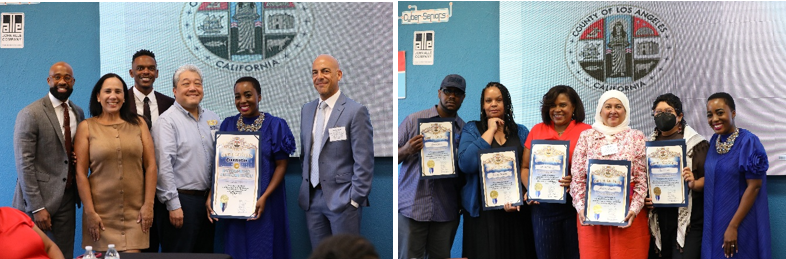
Organizations are invited to join the implementation phase by committing to achievable goals over the next three years. Commitments can be submitted through the Digital Equity Roadmap Implementation Form by 5:00 p.m. PST on November 20, 2026.
AccessTech Summit: Advancing Bay Area Digital Inclusion
The SF Tech Council hosted the 2026 Bay Area AccessTech Summit in San Francisco on October 22, which brought together nonprofits, government agencies, funders, workforce professionals, and community leaders for a full day of collaboration on digital inclusion. Sessions covered digital accessibility, workforce development, scams and fraud prevention, and strategies to bridge the digital divide, along with a panel on sustainable funding moderated by CDT Deputy Director Scott Adams. The event also featured an AI for Nonprofits Workshop with practical sessions on ethical AI adoption, fundraising, cybersecurity, and data analysis, highlighting the region’s shared commitment to advancing digital equity.
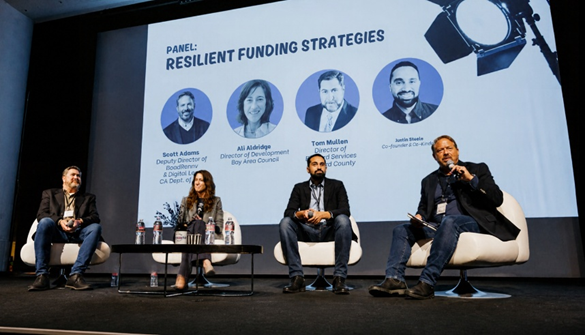
For more information: AccessTECH Summit — SF Tech Council
Please send story ideas related to your work to close the digital divide and foster digital equity to digitalequity@state.ca.gov for consideration in future Broadband for All email updates.
Broadband for All Update
Thank you for attending the Q4 California Broadband Council Meeting
The Q4 California Broadband Council (CBC) meeting took place on Friday, October 23, at the Sacramento County Administration Center and online via Zoom. The meeting included a year in review of progress on the Broadband for All Action Plan, Middle-Mile Broadband Initiative, Last Mile programs, and affordability and adoption initiatives. The agenda also featured a Member Spotlight on the California Educators Together Platform from the California Department of Education, followed by a Community Spotlight from the Los Angeles (LA) County Internal Services Department on the LA County Digital Equity Roadmap.
The 2027 CBC quarterly meetings are confirmed for the following dates:
- January 21
- April 23
- July 23
- October 22
Please note that January 21 meeting will be held on Thursday. All other quarterly meetings will be held on Fridays.
To prepare for the next meeting, review past recordings, presentations, and minutes on the Broadband for All: Past Events page.
Middle-Mile Broadband Initiative Update
Introducing Bridge Fiber, California’s Open-Access Network
In October 2026, the Middle-Mile Broadband Network (MMBN) introduced its new branding, Bridge Fiber, California’s Open-Access Network, giving the statewide network a new identity as it connects with prospective customers and partners. The name reflects the network’s mission to help bridge the digital divide by making broadband infrastructure available to providers and organizations working to expand internet access across California.
While the name is new, the mission remains the same, expanding broadband access and helping close California’s digital divide. Interested customers can scan the QR code below or here to explore Bridge Fiber’s services and connect directly with the team.

Where the Fiber Meets the Ground, CDT Is Showing Up Across California
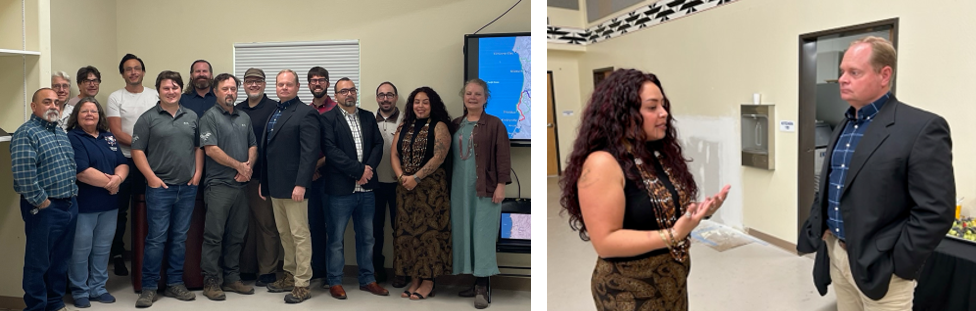
This fall, CDT’s MMBI team traveled across the State to meet with tribal and community leaders, observe construction progress, and give State and local partners a firsthand look at how California’s broadband network is taking shape. From tribal communities in Northern California to active construction along the Bay Bridge, these visits brought partners closer to the work and gave them an opportunity to see how plans are turning into infrastructure on the ground.
In the north, the team made the roughly 300-mile drive to join the Karuk Tribe as it prepared to break ground on the second major segment of its network along the Klamath River, a milestone more than 13 years in the making. Many of those in attendance have worked toward this day since the very beginning, bringing the community closer to reliable, affordable internet access. The team also visited the Hoopa Valley Tribe, touring its installations and an advanced data center that will be ready to serve the community once it connects to the network.
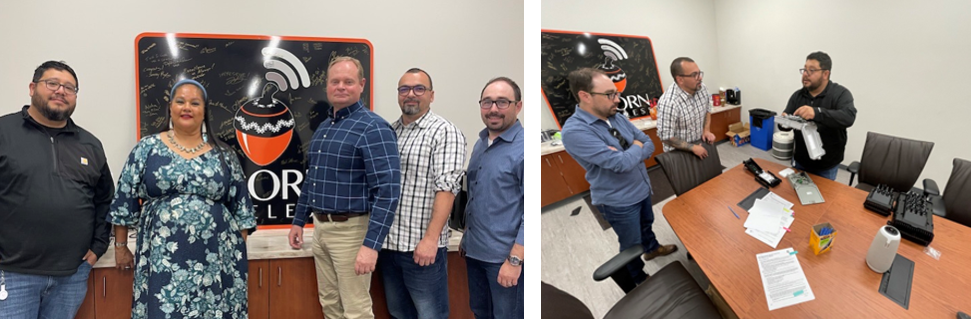
Other visits offered a closer look at how the network comes together. In late September, members of the Department of Finance joined the team at active construction sites in West Sacramento and Petaluma. They saw conduit installed along a bridge, toured the inside of a hut that will house the network’s equipment, and watched the involved process of a crane lifting a hut from a truck onto its foundation, a moment that will be repeated at another 122 sites across the State. On October 20, the team toured active construction along the Bay Bridge, from the Oakland touchdown to Yerba Buena Island, then met with local partners to discuss progress and how they plan to connect their communities.
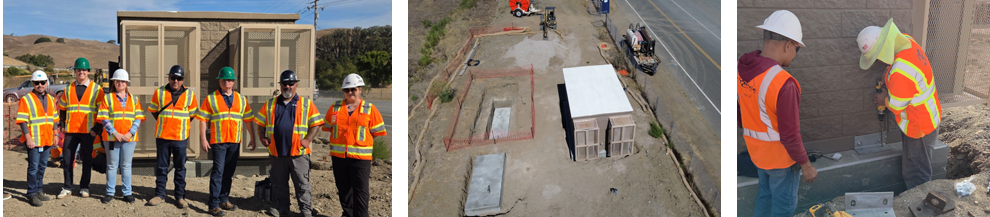
Each visit reflects California’s investment in the backbone that connects local broadband projects to the wider internet. Bridge Fiber, California’s Open-Access Network, is open to all customers and will help expand access to high-speed internet for communities, schools, and businesses in unserved and underserved communities. Visit the Bridge Fiber website to explore available services or submit an inquiry to the team.
Installation Updates as of October
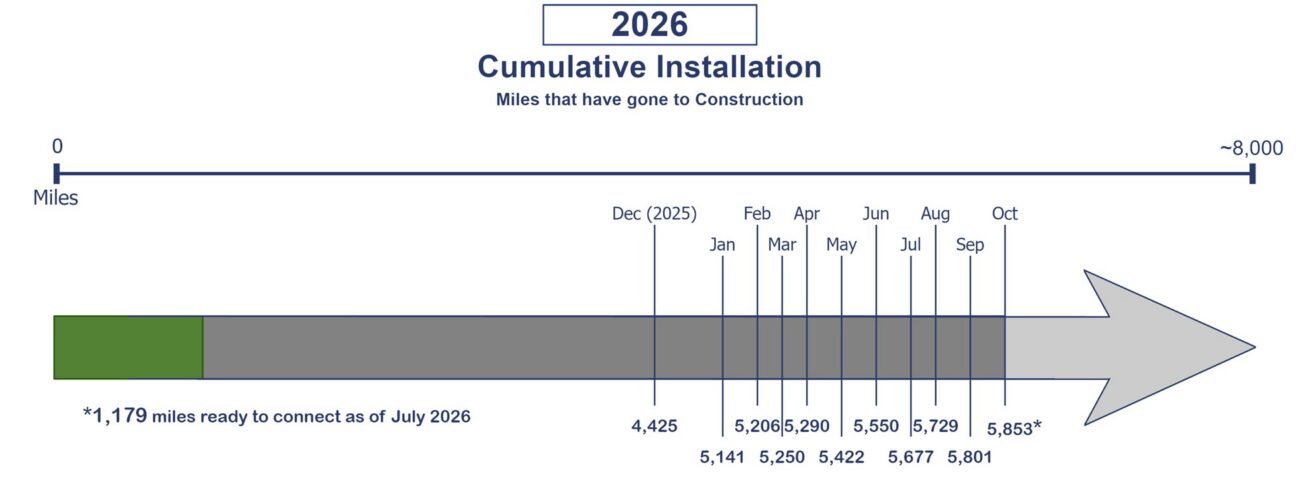
The MMBI continues to make progress across the state. Below is a snapshot of the network’s status as of mid-October 2026:
MMBI by the Numbers
- Total network miles: 8,217
- All 58 counties reached
- Miles in preconstruction phase: 2,364
- Miles in installation phase: 4,674
- Miles Ready-to-Connect: 1,179
- 9 tribal partnerships
Breakdown of Updates as of October 2026:
Hut Highlights:
MMBI now has 84 hut sites in construction:
- As of September, 71 huts were under construction in various counties.
- In October, construction began on an additional 13 huts in Amador, Plumas, Stanislaus, Tehama, San Luis Obispo, Sonoma, Sutter, Fresno, Lake, and Alameda counties.
Last Mile Program Update
Broadband Equity, Access, and Deployment Program
California’s Broadband Equity, Access, and Deployment (BEAD) program is a $1.86 billion federally funded program being implemented by the National Telecommunications and Information Administration (NTIA).
California is eager to complete awards to more than 80 approved broadband infrastructure projects serving approximately 270,000 locations, pursuant to the federal process. California’s BEAD Final Proposal for awards to applicants selected through the BEAD Subgrantee Selection Process was approved by the NTIA on July 17, 2026. The California Public Utilities Commission (CPUC) unanimously ratified the plan on September 17, 2026.
View California’s BEAD awards as approved by NTIA in this dashboard and interactive map. For the latest program information and updates, visit the California BEAD Final Proposal webpage.
Upcoming Broadband Grant Opportunities
Three California Advanced Services Fund (CASF) grant programs have upcoming January 1st application windows. Interested entities can prepare to apply to these CPUC programs:
- Broadband Infrastructure Grant Account – November 2, 2026 (extended from October 1), see program website for the most up-to-date information
- Tribal Technical Assistance Account – January 1, 2027
- Broadband Adoption Account – January 1, 2027
- Broadband Public Housing Account – January 1, 2027
For the most up to date information on CASF programs, please visit the California Advanced Services Fund website.
Last Mile Federal Funding Account
The last mile Federal Funding Account supports fiber broadband infrastructure across California, where reliable high-speed service is needed most. The CPUC is excited to see the $1.23 billion investment, from two rounds of funding, deploying last mile infrastructure projects in all of the state’s 58 counties.
Check out this broadband story spotlight on the City of Ukiah’s Gigabit Fiber Project: California Connectivity Stories: City of Ukiah. Learn more on the program website: Last Mile Federal Funding Account.
Broadband Affordability Update
LifeLine Home Broadband Pilot Program
The California LifeLine Home Broadband Pilot Program helps eligible households lower the cost of internet service. Customers who qualify can receive either a $20 monthly discount for standalone broadband, or $30 for broadband bundled with (wireline or wireless) voice service from the same provider.
The program was updated on October 8, 2026, so that customers can access more broadband data, helping eligible households stay connected online for work, school, healthcare, and everyday activities. CPUC Updates California LifeLine to Increase Support for Low Income Households
Participating providers can be found by zip code with this search tool: Provider Search – California LifeLine. More information is on the CPUC’s California LifeLine Home Broadband Pilot Program webpage.
State Digital Equity Plan Updates
October Digital Equity Community of Practice Recap
Thank you to all the digital inclusion partners and stakeholders who attended the October 29 Digital Equity Community of Practice. For those who missed it, highlights included:
- Guest Speakers
- Angela Siefer, Executive Director, National Digital Inclusion Alliance (NDIA), who shared Digital Inclusion Week highlights and Competitive Grant status updates
- Kat Zigmont, Senior Vice President, California Emerging Technology Fund (CETF), who shared updates on the 2027 Statewide Digital Equity Survey
- Panel discussion of Local Digital Inclusion Providers
- Adele McClain, Adult Ed Coordinator, Apple Valley Adult School
- Martha Gomez, Managing Director, Trans Can Work
- Lily Rojo, Technical Services Librarian, Mendocino County Library
- Robert Guerrero, Digital Navigator, Sigma Beta Xi
CPUC also provided updates on the California LifeLine Home Broadband Pilot Program. CDT shared updates on the Digital Inclusion Partnership, a Pew report on broadband policy, and upcoming grant opportunities.
Find past meeting recordings, presentations, and minutes on Broadband for All: Past Events. Register for the next Community of Practice on Thursday, November 19 at 10:30 a.m. via Zoom.
Tools and Resources
Free Digital Inclusion Resources Available Across California
CDT is collaborating with nonprofit partners to provide free digital inclusion tools, training, and services to community-based organizations across California. This effort aims to strengthen the digital capacity of local and tribal governments, libraries, schools, nonprofits, and other organizations that support residents directly.
Through this initiative, organizations can access a variety of offerings, including digital inclusion program management training, staff digital navigation training, digital literacy assessment tools, and AI skills development. These resources are designed to expand equitable access to technology and increase digital opportunity statewide.
If your organization is ready to advance community digital inclusion efforts, complete the Digital Tools and Resources Sign-Up Form to be connected with available services.
Digital Equity Resource Finder
California’s Digital Equity Resource Finder is a statewide tool that helps residents find digital inclusion programs right in their communities, such as assistance in enrolling affordable home internet, obtaining free or low-cost devices, digital skills training, and more. The Resource Finder is searchable by location and updated by organizations across the state. Know someone who needs support getting connected? Send them to the Digital Equity Resource Finder.
Help promote the Digital Equity Resource Finder using email, newsletter, and social media templates in the Outreach Toolkit.
Low-Cost Offer Finder Tool
CDT has partnered with Everyone On to help California residents find affordable broadband service and computing devices, by zip code. The low-cost offer finder tool provides access to low-cost internet services, computer equipment, and digital skills training.
Broadband for All Portal Funding Finder
The funding finder tracks broadband deployment, adoption, and digital literacy funding opportunities as they become available. Find these opportunities here.
Upcoming Events
**Find materials from past events. See future calendar events.
| Date | Time | Event | Locations and Links |
| Thursday, November 19, 2026 | 10:30 am – 12:00 pm | Digital Equity Community of Practice (Virtual) | Register on Zoom |
| Friday, January 15, 2026 | 10:00 am – 12:00 pm | Middle-Mile Advisory Council Meeting (Hybrid) | Sacramento County Administration Center 700 H St., 1st Floor, Sacramento, CA 95814 Meeting Details |
| Thursday, January 21, 2026 | 9:30 am – 11:30 am | California Broadband Council Meeting (Hybrid) | Sacramento County Administration Center 700 H St., 1st Floor, Sacramento, CA 95814 Zoom Webinar |
Job Opportunities
The California Department of Technology is hiring across many teams to support Broadband for All. Apply using the link below.
Keep an eye on other CDT Broadband job postings and CPUC job postings. Visit CalCareers for more information and to apply for open positions.


